
Electrolysis vs Laser Hair Removal: Complete Expert Comparison Guide for 2026
Choosing between electrolysis vs laser hair removal represents one of the most important decisions you’ll make in your permanent hair removal journey. Both methods offer long-term solutions to unwanted hair, but they work through entirely different mechanisms, require vastly different time commitments, and deliver varying results depending on your skin tone, hair color, and treatment area. Understanding which permanent hair removal method aligns with your specific needs, budget, and expectations can save you thousands of dollars and countless hours of treatment time.
This guide breaks down everything you need to know about laser vs electrolysis effectiveness, including how each technology works, realistic timelines from first session to completion, cost comparisons for common body areas, pain levels you can expect, and which method delivers truly permanent results. You’ll also learn when combining both treatments makes strategic sense, and how modern laser technology has evolved to treat diverse skin types safely and effectively.
Quick Answer
Laser hair removal treats large areas quickly and works best on dark hair with light to medium skin tones, while electrolysis works on all hair and skin colors but treats one follicle at a time, making it ideal for small areas or finishing touches after laser treatment.
What Is Laser Hair Removal and How Does It Work?
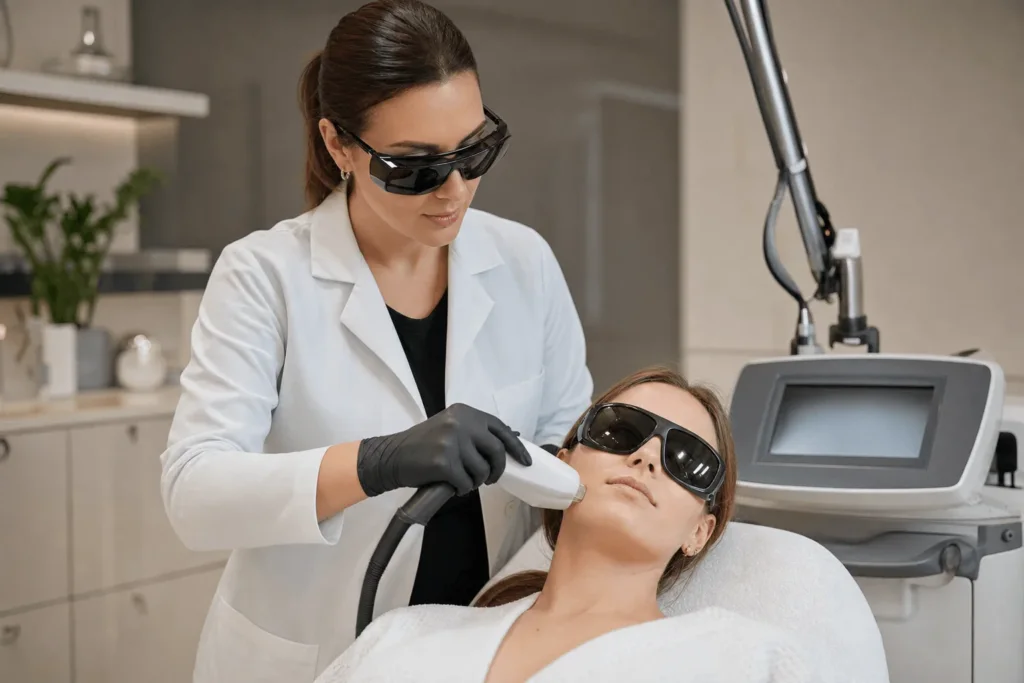
Laser hair removal uses concentrated beams of light energy to target melanin, the pigment inside hair follicles. When the laser pulse hits the hair shaft, thermal energy travels down to the follicle’s root and damages the cells responsible for hair growth. This selective photothermolysis process disrupts the follicle without harming surrounding skin tissue when performed correctly.
The treatment only affects hairs in the anagen phase, the active growth stage of the hair cycle. Since only 20-30% of your body hair sits in anagen at any given time, you need multiple sessions spaced 4-8 weeks apart to catch different hairs as they enter growth phase. At Bright and Beauty Laser Clinic in North York, Soraya uses medical-grade diode laser technology that delivers precise wavelengths calibrated for different skin tones on the Fitzpatrick scale.
What Is Electrolysis and How Does It Work?
Electrolysis destroys individual hair follicles using electrical current delivered through a fine probe inserted directly into each follicle opening. Unlike laser’s broad beam approach, electrolysis targets one hair at a time with surgical precision. A trained electrologist inserts a sterile, hair-thin probe alongside the hair shaft, then applies electrical energy that creates a chemical reaction or heat to permanently damage the follicle’s growth cells.
The FDA recognizes electrolysis as the only truly permanent hair removal method because it can eliminate follicles regardless of hair or skin color. This universal effectiveness stems from its mechanism: electrical current doesn’t rely on melanin to find its target like laser does. Each hair requires its own insertion and treatment, making electrolysis exceptionally time-consuming for large body areas.
Key Takeaways
- Laser treats large areas quickly; electrolysis works best for small, precise areas
- Expect 6-8 laser sessions versus 12-24+ electrolysis sessions for similar coverage
- Laser costs less per session but requires multiple treatments for permanence
- Electrolysis works on all hair colors; laser requires dark hair pigment
- Combination approach uses laser first, then electrolysis for remaining stragglers
Electrolysis vs Laser Hair Removal: Complete Comparison Table
Direct comparison reveals stark differences in how electrolysis compared to laser performs across key decision factors. This side-by-side breakdown helps you evaluate which method aligns with your priorities, whether that’s speed, permanence, versatility, or cost efficiency.
| Factor | Laser Hair Removal | Electrolysis |
|---|---|---|
| Treatment Speed | Treats hundreds of follicles per pulse; full legs in 45-60 minutes | One follicle at a time; full legs require 100+ hours total |
| Session Requirements | 6-8 sessions for most areas; 4-6 weeks apart | 12-30+ sessions; weekly or biweekly appointments |
| Hair Color Compatibility | Requires dark hair with sufficient melanin; doesn’t work on blonde, gray, red, or white hair | Works on all hair colors including white, gray, blonde, and red |
| Skin Tone Compatibility | Modern lasers (diode, Nd:YAG) safely treat all Fitzpatrick types with proper settings | Works on all skin tones without melanin-related risk |
| Permanence | 85-95% permanent reduction; occasional maintenance needed | 100% permanent destruction of treated follicles (FDA-approved permanent removal) |
| Best For | Large areas (legs, back, chest, arms); dark hair on light-to-medium skin | Small areas (eyebrows, upper lip, chin); light/gray hair; precision work |
| Pain Level | Moderate snap or rubber band sensation; tolerable for most clients | Sharp pinch or sting per insertion; intensity varies by area sensitivity |
| Cost Per Session | $100-$500 depending on area size | $50-$150 per hour (small areas only practical) |
| Total Cost Example (Underarms) | $600-$1,200 for complete series | $1,500-$3,000+ for complete clearance |
| Downtime | Mild redness 2-24 hours; return to normal activities immediately | Possible swelling, scabbing; small risk of temporary hyperpigmentation |
This comparison makes clear why many clients choose laser for broad coverage areas where it works effectively, then consider electrolysis only for touch-ups on remaining hairs or areas where laser isn’t suitable. The question isn’t always which is better laser or electrolysis in absolute terms. It’s which method best matches your specific combination of hair color, skin tone, treatment area size, and timeline expectations.
Effectiveness and Permanence: Which Delivers True Permanent Results?
The permanence question separates marketing claims from clinical reality. Electrolysis holds FDA approval for permanent hair removal, meaning treated follicles are destroyed and will never produce hair again. Laser hair removal earns FDA clearance for permanent hair reduction, a distinct classification indicating significant long-term decrease but not absolute elimination of all treated hairs.
This terminology difference matters less than you might think for most practical purposes. Well-executed laser treatment series typically achieve 85-95% permanent reduction of hair in treated areas. For most clients, this level of clearance feels functionally permanent since any remaining hairs are usually finer, lighter, and sparse enough that they don’t bother most people.
Electrolysis achieves true permanence but only for follicles successfully treated. The one-at-a-time nature means an electrologist might treat 500 follicles in your underarm but miss another 200 that weren’t visible during that session. You’ll need follow-up sessions to catch those hairs when they emerge.
Long-Term Results and Realistic Expectations
After completing a full laser series, expect 85-95% reduction in hair growth, meaning the treated area will have significantly less hair that’s finer and lighter in color. Year one post-treatment shows maximum clearance. Years 2-5, approximately 80-90% of clients maintain results without touch-ups. After 5-10 years, about 70-80% still report satisfaction, while 20-30% return for single maintenance sessions addressing minor regrowth.
Electrolysis delivers 100% permanent removal of successfully treated follicles. However, achieving complete clearance requires treating every follicle in the area across multiple sessions. Years 1-5 post-completion typically show excellent maintenance of results. Long-term, new follicle activation from hormonal changes may occur, requiring occasional touch-ups.
Hormonal factors affect both methods’ long-term results. Conditions like polycystic ovary syndrome (PCOS), thyroid disorders, or hormonal shifts during pregnancy and menopause can trigger new follicles to activate or dormant ones to resume production. Neither laser nor electrolysis prevents this new growth because they don’t change your underlying hormone levels. Clients with hormonal conditions should expect maintenance sessions every 1-3 years to address hormonally-driven new growth.
Cost, Time Commitment, and Session Requirements Compared
Financial investment and time demand both factor heavily into choosing between laser hair removal or electrolysis. While per-session costs might seem comparable for small areas, total investment diverges dramatically when you calculate complete treatment series for different body zones.
Laser pricing typically follows a per-area model. Small zones like upper lip or chin cost $75-$150 per session. Medium areas including underarms or bikini line run $150-$300 per session. Large areas such as full legs or back cost $300-$600 per session. Package deals offering 6-8 session bundles usually provide 15-25% discounts compared to individual session pricing.
Electrolysis charges by time rather than body area, typically $50-$150 per hour depending on your geographic location and practitioner expertise. This hourly model works reasonably for small areas like eyebrow shaping but becomes prohibitively expensive for larger zones requiring dozens of hours.
Total Treatment Costs for Common Body Areas
| Treatment Area | Laser: Total Series | Electrolysis: Total Series |
|---|---|---|
| Upper Lip | $450-$1,200 (6-8 sessions) | $900-$2,000 (12-16 hours total) |
| Underarms | $900-$2,000 (6-8 sessions) | $2,250-$3,750 (30+ hours total) |
| Bikini Line | $1,200-$2,800 (6-8 sessions) | $3,000-$5,000 (40+ hours total) |
| Full Legs | $2,800-$5,400 (7-9 sessions) | $15,000-$25,000+ (200+ hours, rarely practical) |
These numbers explain why laser dominates for larger treatment areas. The time and cost efficiency advantages become overwhelming once you move beyond small facial zones. Electrolysis remains the only option for light hair colors but makes financial sense primarily for small, targeted areas.
Real Timeline Comparison with Specific Session Schedules
Understanding realistic schedules helps you plan around important events and set appropriate expectations. Here’s what actual treatment progression looks like for common areas:
Laser Hair Removal Timeline for Underarms: Session 1 (Week 0, baseline treatment), Session 2 (Week 6, notice 20-30% reduction), Session 3 (Week 12, see 40-50% reduction), Session 4 (Week 20, achieve 60-70% reduction), Session 5 (Week 28, reach 75-85% reduction), Session 6 (Week 38, final session targeting remaining follicles). Evaluate final results 3-6 months post-completion. Total timeline: 9-12 months from start to finish.
Electrolysis Timeline for Underarms: Sessions 1-4 (Weeks 0, 1, 2, 3, initial clearance targeting visible hairs), Sessions 5-12 (biweekly for 4 months, catching regrowth cycles), Sessions 13-20 (monthly maintenance, addressing persistent follicles), Sessions 21-30 (as-needed touch-ups for final clearance). Total timeline: 12-18 months with significantly more chair time per appointment.
Laser Hair Removal Timeline for Brazilian: Session 1 (Week 0), Session 2 (Week 6), Session 3 (Week 12), Session 4 (Week 20), Session 5 (Week 28), Session 6 (Week 38), Session 7 (Week 50, if needed), Session 8 (Week 62, final touch-up if needed). Total timeline: 12-16 months. Each session: 20-30 minutes.
Laser Hair Removal Timeline for Full Legs: Session 1 (Week 0), Session 2 (Week 8), Session 3 (Week 16), Session 4 (Week 26), Session 5 (Week 36), Session 6 (Week 48), Session 7 (Week 60), Session 8-9 (Weeks 74-88, if needed for complete reduction). Total timeline: 14-20 months. Each session: 45-60 minutes.
Clients often underestimate timeline commitment for large areas. During consultations in our North York location, we show realistic completion schedules so you can plan around vacations, weddings, or beach seasons. Starting treatment 12-16 months before a major event ensures you’ll have smooth, hair-free skin when it matters most.
Pain Levels, Side Effects, and Safety Considerations
Pain tolerance varies dramatically between individuals, but general patterns emerge when comparing discomfort levels between laser and electrolysis. Neither method qualifies as pain-free, though both remain tolerable for most clients without anesthesia.
Pain and Discomfort Comparison
Laser hair removal feels like a quick rubber band snap or hot pinch with each pulse. Modern systems include cooling mechanisms that spray refrigerant or apply chilled sapphire tips immediately before and after each pulse, significantly reducing discomfort. Most clients describe the sensation as briefly intense but not unbearable. Treatment feels more uncomfortable during your first session when hair density is highest. Subsequent sessions become progressively more comfortable as hair growth thins.
Pain intensity varies by body area. Bikini and Brazilian zones register as most uncomfortable due to nerve density and sensitive skin. Underarms produce moderate discomfort. Large areas like legs and back feel relatively tolerable because skin is less sensitive. Most clients rate laser pain at 3-5 out of 10.
Electrolysis delivers a sharp sting or burning sensation with each probe insertion and current application. Since treatment addresses individual follicles sequentially, you experience repeated discomfort throughout each session rather than brief pulses. A 60-minute electrolysis appointment might involve 400-600 individual insertions, each producing its own sensation. Pain levels depend heavily on body area sensitivity. Eyebrow or upper lip electrolysis registers as highly uncomfortable for many clients due to nerve density in facial areas. Most clients rate electrolysis pain at 4-7 out of 10.
Side Effects and Recovery
Side effects for laser hair removal include temporary redness and mild swelling lasting 2-24 hours post-treatment. This inflammation indicates the follicles absorbed energy effectively. Clients with darker skin tones face higher risk of temporary hyperpigmentation or, in rare cases with improper settings, burns. Using appropriate laser types like diode or Nd:YAG for darker skin tones and following conservative energy protocols minimizes these risks substantially.
Electrolysis side effects include redness, swelling, and small scabs where probes entered follicles. Improper technique can cause scarring, pitting, or permanent texture changes if the probe damages surrounding tissue or if infection develops. Proper aftercare including gentle cleansing and avoiding sun exposure reduces complication risk.
Long-Term Safety Profile
Long-term safety profiles look excellent for both methods when performed by qualified practitioners. Decades of clinical use confirm neither laser nor electrolysis causes cancer or systemic health effects. The primary risks remain surface-level skin reactions that resolve or, in worst cases with poor technique, permanent cosmetic issues like scarring or pigmentation changes. Both methods are considered safe during pregnancy in terms of fetal health, though hormonal changes may affect treatment effectiveness.
Skin Type, Hair Color, and Treatment Area Suitability
Biology determines which method works better for your specific situation more than any other factor. The Fitzpatrick skin type scale classifies skin tones from Type I (very fair, never tans) to Type VI (very dark, never burns). Your position on this scale combined with your hair color characteristics creates a suitability profile for each hair removal approach.
Laser Hair Removal Suitability by Skin and Hair Type
Laser hair removal works best on the classic contrast pattern: dark hair with light to medium skin. Types I-IV with black or dark brown hair see the fastest, most dramatic results. Modern diode and Nd:YAG laser systems safely treat Types V and VI, though they require more conservative energy settings and longer treatment series to achieve comparable results. Soraya adjusts treatment parameters at Bright and Beauty Laser Clinic based on detailed skin analysis, using gradually increasing energy levels across sessions to maximize follicle destruction while preventing thermal damage to melanin-rich skin.
The technology cannot overcome one fundamental limitation: laser requires pigment in the hair shaft to work. Blonde, red, gray, and white hair lack sufficient melanin to absorb laser energy effectively. This represents laser’s most significant limitation compared to electrolysis. Medium brown hair produces moderate results, requiring 8-10 sessions instead of 6-8. Light brown or dark blonde hair shows minimal response and isn’t recommended for laser treatment.
Electrolysis Universal Applicability
Electrolysis works regardless of the Fitzpatrick skin type or hair color combination. White facial hair on dark skin? Effective. Blonde arm hair on fair skin? Effective. Gray chest hair? Effective. This universal applicability makes electrolysis the only option for clients whose hair color excludes them from laser treatment candidacy.
Around tattoos, laser hair removal becomes problematic because the tattoo ink absorbs laser energy and can cause burns or fading. Electrolysis works safely on tattooed skin since the electrical current doesn’t interact with ink pigments. For clients with extensive tattoos in treatment areas, electrolysis represents the safer choice.
Treatment Area Recommendations
Treatment area suitability follows logically from speed differences. Laser excels for any area large enough that one-by-one follicle treatment becomes impractical: full legs, back, chest, arms, stomach. Electrolysis makes sense for small, precise areas where its slower speed doesn’t create unreasonable time demands: eyebrow shaping, small patches of white or gray facial hair, isolated areas missed after laser treatment completion.
Sensitive areas like facial zones work well with either method, with choice depending primarily on whether your hair color suits laser treatment or requires electrolysis’s pigment-independent approach. For precision shaping like eyebrow design, electrolysis offers superior control. For broader facial hair reduction across upper lip, chin, or sideburns with dark hair, laser delivers faster results.
Combining Both Treatments: Strategic Approach for Optimal Results
The most sophisticated approach doesn’t view this as an either-or decision. Strategic combination of laser and electrolysis leverages each method’s strengths while avoiding its weaknesses, delivering better outcomes than either technique alone could achieve.
The Combination Protocol
The typical combination protocol uses laser hair removal for initial bulk reduction across the treatment area, then switches to electrolysis for finishing touches. This approach works particularly well for clients with mostly dark hair but scattered light or gray hairs within the treatment zone. Laser clears the dark hair efficiently, then electrolysis addresses the remaining light hairs that laser cannot treat.
Timeline strategy matters here. Complete your full laser series first, wait 6-12 months to see final results and identify persistent regrowth, then begin electrolysis sessions for remaining hairs. Starting electrolysis too early wastes time and money treating follicles that laser will eliminate in subsequent sessions.
Ideal Candidates for Combination Treatment
Facial hair removal for women represents a common combination scenario. Many women experience mostly fine, dark facial hair suitable for laser, but hormonal influences or genetics produce some stubborn gray or blonde hairs. Laser treatments reduce the majority of facial hair growth across the upper lip, chin, and sideburns in 6-8 sessions. Electrolysis then targets the scattered non-responsive hairs in just 3-6 follow-up sessions rather than requiring 15-20 sessions to treat the entire area.
Transgender clients often benefit significantly from combination approaches. Male-to-female individuals seeking facial hair removal typically have dense, dark beard growth ideal for laser’s speed, but also scattered gray or white hairs. Laser reduces beard shadow and bulk dramatically in 8-12 sessions. Electrolysis addresses remaining hairs for complete clearance without the impractical 100+ hour timeline pure electrolysis would require for full beard removal.
Clients with mixed hair colors in the same treatment area gain maximum value from combination treatment. A client with predominantly dark leg hair but patches of blonde or light brown hair can use laser for 90% of the area, then electrolysis for the light-haired sections.
Cost Efficiency of Strategic Combination
Cost efficiency improves substantially with strategic combination. Rather than spending $8,000-$12,000 on electrolysis-only treatment for a large area, you might spend $2,000-$3,000 on laser for bulk reduction plus $1,000-$1,500 on electrolysis finishing work. The hybrid approach cuts total investment by 50-60% while achieving complete clearance.
Not everyone needs combination treatment. If your hair color and skin tone create ideal laser conditions and you’re satisfied with 90% reduction rather than absolute perfection, laser alone suffices. If you’re treating only a small area where electrolysis timeline remains reasonable, electrolysis alone works fine. The combination strategy makes most sense when your circumstances fall between these extremes.
Ready to book your treatment?
Visit Soraya and the team at our North York clinic for a personalized consultation and professional laser or facial treatment.
Frequently Asked Questions
Which is better: laser hair removal or electrolysis?
Laser hair removal works better for large areas and dark hair, offering faster treatment and lower total cost with 85-95% permanent reduction. Electrolysis works better for small areas, light or gray hair, and delivers 100% permanent removal of treated follicles. The best choice depends on your hair color, skin tone, treatment area size, and whether you need absolute permanence or are satisfied with dramatic reduction.
Is electrolysis really permanent compared to laser hair removal?
Yes, electrolysis is FDA-approved for permanent hair removal, meaning successfully treated follicles are destroyed forever. Laser hair removal is FDA-cleared for permanent hair reduction, achieving 85-95% reduction that most clients find satisfactory. However, both methods only affect follicles treated during active sessions. Neither prevents new follicles from activating due to hormonal changes, pregnancy, menopause, or conditions like PCOS.
Which is more painful: electrolysis or laser hair removal?
Most clients find laser hair removal more tolerable due to built-in cooling systems and brief treatment duration. Laser feels like quick rubber band snaps, with entire areas completed in minutes. Electrolysis delivers repeated sharp stings throughout 30-90 minute sessions as each follicle receives individual treatment. Pain ratings average 3-5/10 for laser versus 4-7/10 for electrolysis, with variation by body area sensitivity.
How much does electrolysis cost compared to laser hair removal?
For small areas like upper lip, electrolysis ($900-$2,000 total) and laser ($450-$1,200 total) costs remain comparable. For larger areas, laser becomes dramatically more cost-effective. Underarm laser costs $900-$2,000 complete versus $2,250-$3,750+ for electrolysis. Full leg laser costs $2,800-$5,400 versus $15,000-$25,000+ for electrolysis. The pricing difference reflects treatment speed differences between the methods.
Can laser hair removal work on all skin types and hair colors?
Modern diode and Nd:YAG lasers safely treat all Fitzpatrick skin types I-VI when performed by trained specialists using appropriate settings. However, laser requires dark hair pigment (melanin) to work effectively. Laser works excellently on black, dark brown, and medium brown hair but delivers poor results on blonde, red, gray, or white hair. Clients with light hair colors need electrolysis regardless of skin tone.
How long does each treatment method take to see final results?
Laser hair removal requires 6-8 sessions spaced 4-8 weeks apart, meaning 9-16 months from first treatment to series completion. Most clients notice significant reduction after sessions 3-4. Electrolysis requires 12-30+ sessions depending on area size, typically spaced weekly or biweekly, spanning 6-24 months. Final assessment for either method should wait 6-12 months after the last session to evaluate complete results.
Will I need maintenance treatments with laser hair removal?
Most clients need minimal to no maintenance after completing a full laser series, enjoying results for 5-10 years or longer. However, 10-20% of clients experience gradual regrowth due to hormonal shifts, aging, or new follicle activation. These clients typically return for single maintenance sessions every 1-3 years to address new growth. Hormonal conditions like PCOS, thyroid disorders, or menopause increase maintenance needs.
Can I combine laser hair removal and electrolysis treatments?
Yes, combining both methods often delivers optimal results. The strategic approach uses laser first for bulk reduction of dark hair across large areas, then electrolysis to target remaining light, gray, or stubborn hairs. This combination reduces total treatment time and cost by 50-60% compared to electrolysis alone while achieving more complete clearance than laser alone provides.
Does hair color affect which permanent hair removal method I should choose?
Hair color critically determines method selection. Laser requires dark hair (black, dark brown, medium brown) with sufficient melanin to absorb light energy. Blonde, red, gray, and white hair lack adequate pigment for laser effectiveness. Electrolysis works on all hair colors without limitation, making it the only option for light-colored hair removal.
What percentage of hair reduction should I realistically expect from each method?
Laser hair removal typically achieves 85-95% permanent reduction after completing a full treatment series, with remaining hairs often finer and lighter. Electrolysis achieves 100% permanent destruction of successfully treated follicles. However, achieving complete clearance requires treating every follicle across multiple sessions as different hairs become accessible during growth cycles.
Making Your Decision: Laser, Electrolysis, or Both?
Your optimal path forward depends on matching method characteristics to your specific situation. Clients with dark hair seeking treatment on large areas like legs, back, or arms find laser hair removal delivers unmatched efficiency and value. Those with light, blonde, gray, or white hair, or those treating small precision areas, benefit from electrolysis’s universal applicability. Many clients discover the strategic combination approach offers the best of both worlds.
At Bright and Beauty Laser Clinic in North York, Soraya provides personalized consultations examining your hair color, skin tone, treatment goals, and timeline expectations. Using medical-grade diode laser technology calibrated for diverse Fitzpatrick skin types, the clinic safely treats clients throughout the Toronto area with customized protocols that maximize results while protecting skin integrity.
Ready to start your permanent hair removal journey? Book a consultation at Bright and Beauty Laser Clinic to discuss your specific needs and develop a treatment plan that matches your goals. Call (416) 666-4500 or visit the North York clinic to meet with Soraya and discover which approach will work best for your unique hair and skin characteristics.