
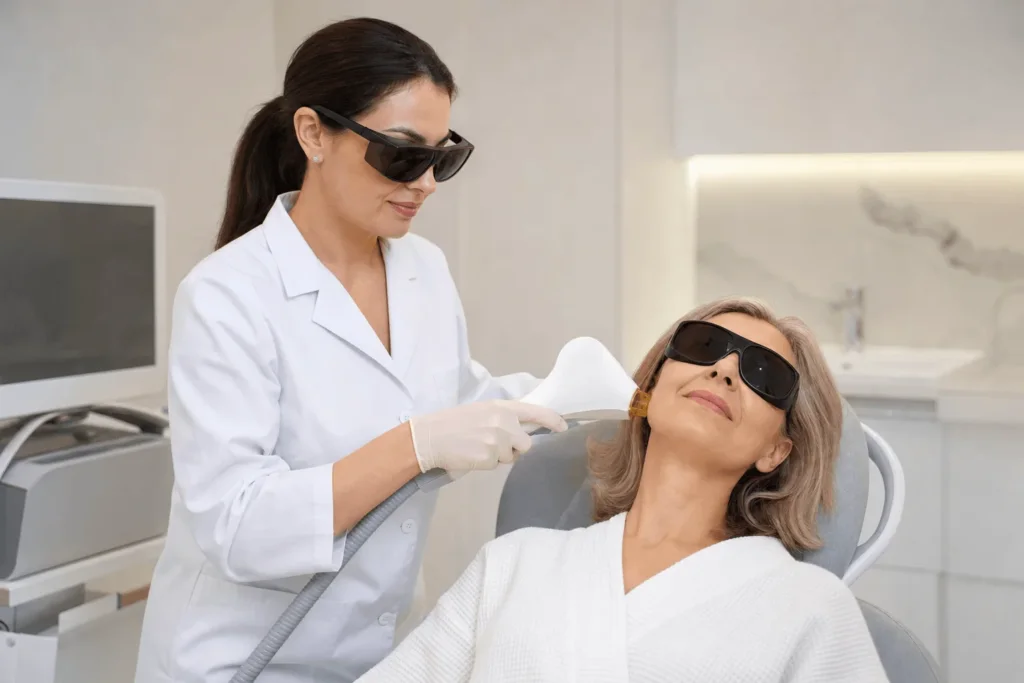
Does Laser Hair Removal Work on Gray Hair? Expert Guide for 2026
If you’re considering permanent hair removal and you’ve started to notice gray hairs, you need to understand the limitations of laser technology before booking your first session. Does laser hair removal work on gray hair? The short answer is no. Laser hair removal cannot effectively treat gray or white hair because the laser targets melanin (pigment) in the hair follicle, and gray hair lacks sufficient melanin for the laser to detect and destroy the follicle.
This article explains the science behind why laser hair removal doesn’t work on gray hair, when you might still be a candidate if you have mixed hair colors, and what permanent hair removal alternatives actually work for gray hair. You’ll also learn about combination treatment approaches that address both pigmented and gray hairs simultaneously, and what to expect during a consultation at Bright and Beauty Laser Clinic in North York.
Quick Answer
Laser hair removal does not work on gray or white hair because the laser targets melanin pigment in hair follicles. Gray hair lacks melanin, making it invisible to laser technology. Electrolysis is the only proven permanent solution for gray hair removal.
Key Takeaways
- Understand gray hair lacks melanin that laser technology requires to work
- Consider electrolysis as the only permanent solution for gray hair removal
- Assess your gray hair percentage to determine laser candidacy with mixed colors
- Explore combination treatments using both laser and electrolysis when appropriate
- Book a consultation to get honest assessment of your hair removal options
Does Laser Hair Removal Work on Gray or White Hair? The Direct Answer
No, laser hair removal does not work on gray or white hair. The technology behind laser hair removal requires melanin in the hair shaft to absorb the laser energy and convert it into heat that destroys the hair follicle.
Gray and white hairs have lost their melanin pigment, which means they appear colorless or gray. Without melanin to absorb the laser light, the energy passes through the hair without generating enough heat to damage the follicle. The treatment simply won’t produce results, no matter how many sessions you complete or which laser type is used.
This limitation applies to all FDA-cleared laser hair removal systems, including Alexandrite, Diode, and Nd:YAG lasers. While these different wavelengths are effective for various skin tones and hair colors ranging from black to light brown, none can treat hair that lacks pigment.
Why Laser Hair Removal Doesn’t Work on Gray Hair: The Science Behind Melanin Targeting
Understanding why laser hair removal fails on gray hair requires knowing how the technology actually works. The principle behind all laser hair removal is selective photothermolysis, a process where specific wavelengths of light target chromophores (color molecules) in tissue without damaging surrounding structures.
When a laser pulse hits the skin, the melanin in the hair shaft absorbs the light energy and converts it into heat. This heat travels down the hair shaft into the follicle, reaching temperatures of 70-80 degrees Celsius, which is hot enough to damage or destroy the follicle’s ability to produce new hair.
Gray hair contains little to no eumelanin (the pigment that makes hair appear brown or black). As we age, melanocyte cells in hair follicles gradually stop producing melanin. The hair that grows from these follicles appears gray or white because it’s essentially a hollow tube of keratin without color molecules inside. Without melanin to absorb the laser energy, the light simply passes through gray hair without generating heat.
Hair Color Spectrum and Laser Candidacy: Visual Guide
Understanding where your hair falls on the color spectrum helps determine your treatment options. This visual guide shows how different hair colors respond to laser technology, from optimal candidates with dark hair to non-candidates with gray or white hair:
| Hair Color | Melanin Level | Laser Response | Best Treatment Choice |
|---|---|---|---|
| Black | Very High | Excellent | Laser (70-90% reduction in 6-8 sessions) |
| Dark Brown | High | Excellent | Laser (70-90% reduction in 6-8 sessions) |
| Medium Brown | Moderate | Very Good | Laser (65-85% reduction in 6-8 sessions) |
| Light Brown | Low-Moderate | Good | Laser (60-75% reduction in 8-10 sessions) |
| Blonde | Minimal | Poor | Electrolysis only |
| Red | Different Type | Poor | Electrolysis recommended |
| Gray | Very Low | None | Electrolysis only |
| White | None | None | Electrolysis only |
The critical threshold for laser candidacy is the presence of sufficient eumelanin. Once hair transitions past light brown into blonde, red, gray, or white territory, laser effectiveness drops dramatically or disappears entirely.
What If You Have Mixed Hair Colors? Gray Hair Percentage Thresholds
Most people don’t wake up one day with completely gray hair. The transition happens gradually, with pigmented and gray hairs coexisting for years. If your hair is predominantly pigmented with scattered gray hairs, laser treatment can still deliver significant permanent reduction. The laser will successfully treat all the dark hairs while the gray hairs remain unaffected.
| Gray Hair Percentage | Laser Candidacy | Recommended Approach |
|---|---|---|
| 10% or less gray | Excellent candidate | Standard laser treatment; optional electrolysis for gray hairs after |
| 10-30% gray | Good candidate | Laser for pigmented majority; add electrolysis for gray hairs if desired |
| 30-50% gray | Marginal candidate | Combination approach or electrolysis-only may be better value |
| 50%+ gray | Poor candidate | Electrolysis recommended as primary treatment |
When you’re in the 10-30% gray range, the math usually favors starting with laser treatment. You’ll eliminate the majority of hair permanently with 6-8 laser sessions, which is much faster and more affordable than treating every single hair with electrolysis.
Electrolysis: The Permanent Solution for Gray Hair Removal
Electrolysis is the only FDA-approved method for truly permanent hair removal, and unlike laser, it works on any hair color including gray, white, blonde, and red. The technology doesn’t rely on pigment at all.
During electrolysis, a trained specialist inserts a very fine probe into each hair follicle alongside the hair shaft. A small electrical current travels down the probe and destroys the follicle’s growth cells through either heat (thermolysis), chemical reaction (galvanic), or a combination of both (blend method).
Because the process treats follicles individually rather than targeting broad areas with light, hair color is completely irrelevant. The specialist can see and treat any hair follicle, regardless of whether the hair is black, gray, white, or completely transparent.
The main limitation of electrolysis is time. Each hair requires 10-60 seconds of treatment. Treating large areas like legs would require dozens of hours, but for smaller areas where gray hair commonly appears first, like the face, electrolysis is highly practical. Removing gray hairs from the chin, upper lip, and sideburns typically requires 15-30 hours of treatment spread over 12-18 months.
Ready to book your treatment?
Visit Soraya and the team at our North York clinic for a personalized consultation and professional laser or facial treatment.
Combination Treatment Approach: Using Laser and Electrolysis Together
The most practical solution for many clients with mixed hair colors combines both technologies strategically. This approach leverages the strengths of each method while minimizing their limitations.
You begin with a complete series of laser hair removal sessions to address all pigmented hair. For most body areas, this means 6-8 sessions spaced 4-8 weeks apart. Laser treatment eliminates 70-90% of dark hairs in the treated area, achieving this level of reduction in roughly 12-18 months.
After completing your laser series, you assess what remains. If gray hairs represent most of the remaining hair, you transition to electrolysis for the finishing work. Since you’ve already eliminated the majority of hair with laser, the electrolysis phase requires far fewer hours than if you’d started with electrolysis alone.
Some clients choose simultaneous treatment instead. This works well when gray hair is concentrated in specific zones. For example, you might have laser sessions for predominantly dark hair on your legs while receiving electrolysis for gray chin hairs during the same appointment period.
If you notice new gray hairs emerging during laser treatment, don’t worry. The laser will continue working effectively on all pigmented hairs. Each session will still reduce your overall hair density, even if some new gray hairs appear between treatments. Complete your initially planned laser series rather than stopping mid-treatment. After finishing your laser series, reassess your remaining hair. If gray hairs now represent more than 30-40% of what’s left, switching to electrolysis for touch-up sessions makes more sense than purchasing additional laser packages.
We photograph treatment areas at each session, which helps clients see their progress objectively. When graying accelerates mid-treatment, these photos document exactly which areas still respond to laser versus where electrolysis will deliver better value going forward.
What to Expect During Your Gray Hair Consultation at Bright and Beauty Laser Clinic
An honest consultation makes all the difference when you’re dealing with gray hair concerns. At our North York location, the consultation process specifically addresses your hair color situation with realistic outcome expectations.
Hair and Skin Analysis
The appointment begins with a detailed hair and skin analysis under magnification. Soraya examines the treatment area, assessing the percentage of gray hair, the remaining pigmented hair’s color intensity, your skin tone according to the Fitzpatrick scale, and your hair’s texture and growth patterns.
You’ll discuss your complete hair removal goals, not just the specific area that concerns you. Many clients discover during consultation that gray hair affects some areas more than others. Your facial hair might be 60% gray while your underarm or leg hair remains predominantly dark. This affects treatment planning significantly.
Honest Technology Recommendations
Based on the assessment, you’ll receive an honest recommendation about which technology will work for you. If you’re a good candidate for laser, you’ll learn how many sessions you’ll need, what results to expect, and which areas will likely require electrolysis for complete clearance.
If laser won’t deliver meaningful results due to extensive graying, that’s communicated directly. The goal is helping you invest in treatment that actually works, not booking sessions that won’t reduce your hair.
Cost Transparency and Treatment Planning
You’ll receive specific pricing for your recommended treatment plan, whether that’s laser alone, electrolysis alone, or a combination approach. For mixed-color situations, this includes estimated costs for both the laser phase and subsequent electrolysis phase so you can budget appropriately for complete results.
You’ll also discuss timing considerations. If you’re in early stages of graying (under 20% gray), starting laser treatment promptly makes sense before further graying reduces your candidacy. The consultation might recommend beginning treatment sooner rather than waiting if you’re actively graying but not yet predominantly gray.
Frequently Asked Questions
Does laser hair removal work on gray or white hair?
No, laser hair removal does not work on gray or white hair. Laser technology requires melanin pigment in the hair shaft to absorb light energy and convert it to heat that destroys the follicle. Gray and white hairs lack melanin, making them invisible to all laser wavelengths.
Why doesn’t laser hair removal work on gray hair?
Laser hair removal works through selective photothermolysis, where laser light targets the melanin pigment in hair follicles. Gray hair occurs when melanocyte cells stop producing melanin as part of aging. Without melanin to absorb the laser light, the energy passes through the hair without generating sufficient heat to affect the follicle.
Can I get laser hair removal if I have some gray hairs mixed with dark hair?
Yes, you can still benefit from laser hair removal if your gray hair represents less than 30-40% of total hair in the treatment area. The laser will successfully treat all pigmented dark hairs while leaving gray hairs unaffected. After completing your laser series, you can address remaining gray hairs with electrolysis if desired.
Is electrolysis effective for removing gray hair permanently?
Yes, electrolysis is the only proven method for permanently removing gray and white hair. Unlike laser, electrolysis doesn’t rely on hair pigment. The treatment uses electrical current delivered through a fine probe inserted into each follicle to destroy growth cells directly. This works on any hair color including gray, white, blonde, and red.
What happens if I try laser hair removal on gray hair anyway?
If you proceed with laser treatment on gray hair despite the limitations, you will spend money and time without achieving permanent hair reduction on the gray hairs. The gray hairs will continue growing normally after each session because the laser cannot generate enough heat in follicles without melanin. You may see results on any remaining pigmented hairs, but the gray hairs will be completely unaffected.
Plan Your Treatment Path Forward
Understanding the relationship between hair color and laser effectiveness helps you make informed decisions about permanent hair removal. Gray hair limitations are frustrating, but they’re also straightforward once you understand the science.
If you’re predominantly pigmented with scattered gray, laser hair removal remains an excellent option that will eliminate the majority of your hair quickly and affordably. If you’re significantly gray, electrolysis gives you a proven permanent solution that works regardless of hair color. And if you’re in between, combination treatment offers the best of both approaches.
What matters most is getting an accurate assessment before you invest time and money in treatment. At Bright and Beauty Laser Clinic in North York, Soraya and the team provide that honest evaluation, helping you understand exactly which treatments will work for your specific hair situation and creating a realistic plan to achieve your goals.
Ready to find out which permanent hair removal approach is right for your hair color? Schedule your consultation at our North York location by calling (416) 666-4500 or booking online. You’ll receive a thorough assessment and straightforward recommendations based on what will actually deliver results for your individual situation.