
Does Laser Hair Removal Hurt? The Truth About Pain and Discomfort in 2026
Here’s something most people don’t expect: the question “does laser hair removal hurt?” doesn’t have a single answer. What feels like a mild rubber band snap to one person registers as genuinely uncomfortable to another. The variation has less to do with pain tolerance and more to do with anatomy, technology, and technique. The upper lip typically registers higher on the discomfort scale than the lower leg, not because one person is tougher than another, but because nerve density varies dramatically across body regions.
Modern laser technology has transformed the experience significantly since the early 2000s. Cooling systems, refined wavelengths, and improved protocols mean today’s treatments bear little resemblance to what your friend described five years ago. Pain is subjective, but we can be objective about what influences it. Understanding the biological mechanics behind sensation, the technological factors at play, and practical strategies for comfort puts you in control. Whether you’re considering your first session or trying to understand why your previous experience felt different than expected, the factors driving discomfort are both measurable and manageable.
The Science Behind Sensation During Laser Treatments
Laser hair removal targets melanin in the hair follicle. When the laser pulses, it generates heat that damages the follicle’s ability to regrow hair. This thermal process is what creates sensation. Think of it as controlled, localized heat delivered in milliseconds. Your nerves respond to this rapid temperature change, and that response is what people describe as pain or discomfort.
The intensity you feel depends on several biological factors. Nerve density matters enormously. Your face contains roughly 100 touch receptors per square centimeter, while your thigh has fewer than 10. This explains why face laser hair removal typically generates more sensation than leg treatments. The bikini area ranks high on the sensitivity scale not just because of cultural taboos, but because the skin is thinner and nerve endings are abundant.
Melanin concentration also affects the experience. Darker, coarser hair absorbs more laser energy, which means the heat generated is greater. Someone with thick, dark hair will typically feel more sensation than someone with fine, light hair during the same treatment. At Bright and Beauty Laser Clinic, we adjust settings based on your hair type and skin tone using precise calibration protocols that optimize results while managing comfort levels.
Skin thickness plays a third role. Areas where skin sits close to bone, like the shin or neck, often feel more intense. There’s less tissue to cushion the sensation. Conversely, areas with more subcutaneous fat typically feel less intense because the tissue acts as a buffer.
How Different Body Areas Compare in Sensitivity
Not all treatment zones are created equal. The variation in discomfort across body areas is dramatic, and understanding this helps set realistic expectations.
The bikini and Brazilian areas consistently rank as the most sensitive zones. The combination of thin skin, high nerve density, and typically dark, coarse hair creates the perfect storm for sensation. Most clients describe it as uncomfortable but tolerable. The first pass often feels most intense, with subsequent passes feeling less acute as the area acclimatizes.
Facial areas vary significantly. The upper lip is notoriously sensitive because of concentrated nerve endings around the mouth. The chin typically feels more manageable, while the ears rarely cause concern. Sideburns fall somewhere in the middle. These differences matter when planning your treatment strategy.
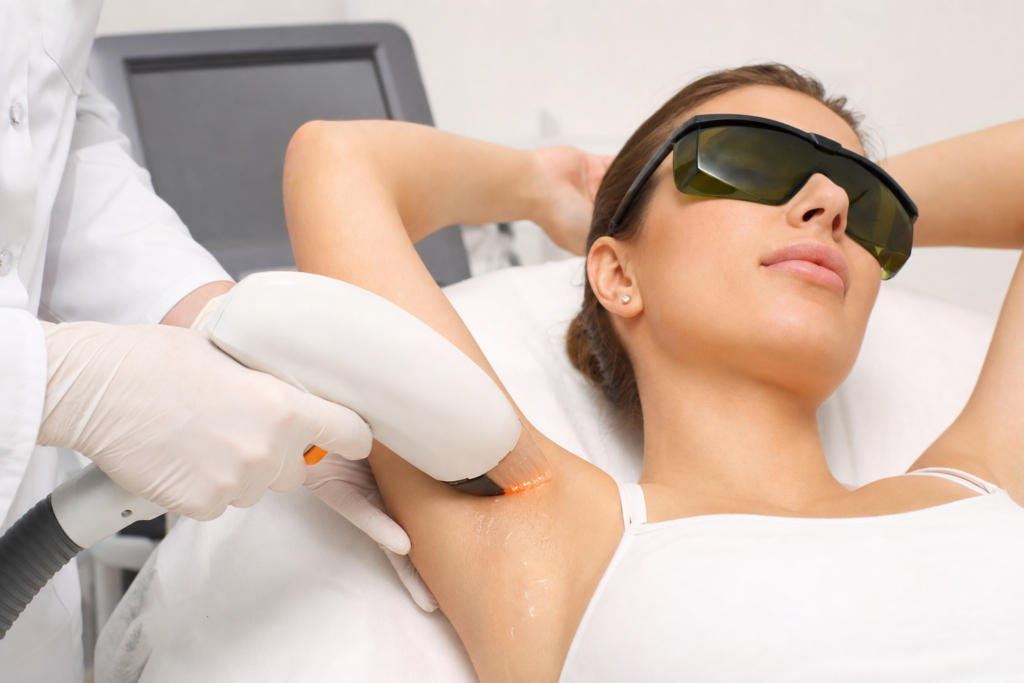
Underarm treatments surprise many people. Despite being a sensitive area for shaving, laser treatments here are generally well-tolerated. The skin is relatively thick, and the curved surface allows for efficient cooling.
Leg treatments depend on location. Half leg treatments covering the lower legs involve some bonier areas like the shin, which can feel sharper. Full leg treatments that include the thigh are often easier on the thigh portion because of the muscle and fat cushioning. Many clients find legs among the easiest areas to treat.
The back and chest also vary. The center of the back over the spine can feel more intense, while the sides typically generate less sensation. The chest depends largely on hair density and individual sensitivity, with the area over the sternum sometimes feeling sharper.
Technology and Technique That Affect Comfort Levels
The equipment matters profoundly. Older laser systems from the early 2000s lacked sophisticated cooling mechanisms and delivered energy less precisely. Modern systems have transformed the experience through multiple innovations.
Cooling technology represents the most significant comfort advancement. Contact cooling systems chill the skin surface before, during, and after each pulse. This pre-cooling numbs nerve endings and protects the epidermis. The difference is substantial. Some systems use cryogen spray that cools the skin to near-freezing temperatures milliseconds before the laser fires. Others employ sapphire cooling tips that maintain constant contact with skin.
At our North York location, we use laser systems with integrated dynamic cooling devices that synchronize perfectly with each pulse. The cooling happens so rapidly that many clients report feeling the cold more prominently than the laser itself. This isn’t marketing speak. The temperature differential genuinely changes the sensory experience by occupying the same nerve pathways that would otherwise register heat.
Wavelength selection also influences sensation. Different lasers use different wavelengths measured in nanometers. Alexandrite lasers (755nm) work quickly but can feel more intense. Nd:YAG lasers (1064nm) penetrate deeper and work better for darker skin tones, often with slightly different sensation profiles. Diode lasers (800-810nm) offer a middle ground. The choice isn’t about pain alone; it’s about matching technology to your skin type and hair characteristics.
Pulse duration affects how heat accumulates in tissue. Shorter pulses deliver energy rapidly, creating sharp but brief sensation. Longer pulses spread energy over more time, sometimes feeling like sustained warmth. Neither is inherently better. The optimal setting depends on your hair type and treatment area.
Spot size influences both efficiency and comfort. Larger spot sizes treat more area per pulse, which means fewer total pulses and shorter treatment times. However, they also require higher energy levels. Smaller spot sizes allow for more precise energy control, particularly useful around sensitive areas.
Technique matters as much as technology. The angle of application, the speed of movement, and the overlap between pulses all affect the experience. An experienced technician maintains consistent contact, moves systematically to avoid missing areas, and adjusts settings in real-time based on your skin’s response. These subtle refinements accumulate into a noticeably different experience.
Comparing Pain Levels to Other Common Sensations
People struggle to describe laser hair removal sensation because it’s unique. The most common comparison is a rubber band snap, which captures the brief, sharp quality but misses the thermal component. A more accurate description might combine a quick snap with the feeling of touching something warm.
Here’s how it stacks up against other hair removal methods. Waxing typically hurts more than laser treatment. Waxing involves ripping multiple hairs simultaneously from the root, creating sustained pulling pain across larger areas. Laser treatment addresses individual follicles with rapid pulses. Most people who’ve experienced both rank laser as less painful overall, though specific areas like the upper lip can feel comparable.
Threading generates similar sensation levels to laser on the face, with the added duration factor. Threading a full upper lip takes several minutes of continuous pulling. Laser treatment of the same area takes 30 seconds to a minute with intermittent pulses. The brief nature of laser exposure works in its favor psychologically.
Tattoo removal registers significantly higher on the pain scale than hair removal. Tattoo removal breaks up ink particles deep in the dermis, requiring higher energy levels and creating more heat. People who’ve undergone both procedures consistently rate hair removal as markedly more comfortable.
Compared to electrolysis, laser treatment covers more ground faster. Electrolysis treats one follicle at a time with a probe, creating a tiny burning sensation at each insertion point. For large areas, the cumulative effect of hundreds of individual insertions exceeds the discomfort of laser treatment, even if each individual electrolysis insertion feels minor.
The medical procedure most comparable might be certain types of skin rejuvenation treatments. If you’ve had intense pulsed light (IPL) therapy or certain laser skin treatments, the sensation shares similarities. Both involve brief thermal pulses, though the settings and purposes differ.
Practical Strategies to Minimize Discomfort
You have more control over your comfort than you might think. Strategic preparation and in-the-moment techniques make measurable differences.
Timing your appointment matters. Schedule treatments when you’re not rushed or stressed. Anxiety amplifies pain perception through well-documented neurological pathways. A relaxed nervous system processes sensation differently than an activated one. Some clients prefer morning appointments when pain tolerance tends to be higher. Others find afternoon sessions better because they’ve had time to ease into the day.
Avoid caffeine for several hours before your appointment. Caffeine heightens nervous system sensitivity, making you more reactive to stimuli. This isn’t placebo effect. Caffeine blocks adenosine receptors, which affects how pain signals are processed. Switching to decaf the morning of your treatment is a simple adjustment with real impact.
Menstrual cycle timing influences sensitivity for women. Pain thresholds drop during menstruation and the days immediately before. Estrogen and progesterone fluctuations affect nerve sensitivity. If possible, schedule treatments for the week following your period when pain tolerance peaks. This biological rhythm is consistent enough that many clients notice the pattern after a few sessions.
Topical numbing creams provide genuine relief, particularly for sensitive areas. Lidocaine-based creams applied 30-45 minutes before treatment penetrate the epidermis and temporarily block nerve signals. They’re most effective on areas like the upper lip, bikini line, or underarms. Apply a thick layer, cover with plastic wrap to enhance absorption, and remove just before treatment. We provide specific product recommendations and application instructions at Bright and Beauty Laser Clinic because proper use significantly affects efficacy.
Over-the-counter pain relievers offer modest help. Taking ibuprofen or acetaminophen 30 minutes before your appointment can take the edge off. However, avoid aspirin, which thins blood and can increase the risk of bruising or purpura at treatment sites.
Hydration affects skin’s response to treatment. Well-hydrated skin conducts heat differently than dehydrated skin. Drink plenty of water in the days leading up to your appointment. This isn’t mystical wellness advice. Hydrated tissue has different thermal properties that can influence both results and comfort.
Communication during treatment is essential. Your technician can’t feel what you’re feeling. Immediate feedback allows for real-time adjustments. If an area feels too intense, saying so allows for spot size changes, cooling adjustments, or brief pauses. The goal is effective treatment, not endurance testing.
Controlled breathing techniques genuinely help. Deep, slow breaths activate the parasympathetic nervous system, which naturally dampens pain signals. Try breathing in for four counts, holding for four, and exhaling for six. This pattern shifts your nervous system toward a calmer state. It sounds simple because it is, but the physiological effect is measurable.
Distraction works through attention mechanisms. Your brain has limited processing capacity for sensory information. Engaging in conversation, listening to music, or focusing on a specific mental task diverts neural resources away from pain processing. Some clients prefer silence and meditation, others want active discussion. Neither approach is superior. Choose what works for your psychology.
What to Expect During Your First Session
First-time experiences shape your entire perception of laser hair removal, so knowing what actually happens removes anxiety-amplifying uncertainty.
You’ll start with a consultation that maps your treatment areas and discusses your medical history. Certain medications increase photosensitivity, and some conditions affect healing. This isn’t bureaucracy. These details directly inform safe, effective settings. Your skin type will be classified using the Fitzpatrick scale, which ranges from Type I (very fair, always burns) to Type VI (deeply pigmented, never burns). This classification determines appropriate wavelengths and energy levels.
The treatment area gets cleaned thoroughly to remove oils, lotions, and debris that could interfere with laser penetration. You’ll receive protective eyewear. The laser light can damage eyes, so these aren’t optional regardless of treatment location.
Test pulses come next. The technician applies a few pulses at conservative settings to assess your skin’s immediate response and your comfort level. This isn’t just courtesy. Skin reactions vary, and test pulses prevent adverse responses during full treatment. You’ll be asked to rate the sensation, which informs adjustments.
The actual treatment follows a systematic pattern. The handpiece moves across the treatment area in organized sections, ensuring complete coverage without excessive overlap. You’ll hear the laser fire, a sound somewhere between a snap and a mechanical click. Modern systems fire rapidly, with some delivering 2-3 pulses per second. The cooling sensation happens simultaneously, creating an interesting contrast of temperatures.
Duration varies dramatically by area. Upper lip treatments take 1-2 minutes. Full body treatments can take 2-3 hours depending on coverage. Legs take 20-40 minutes depending on whether you’re treating half legs or full legs. The bikini area typically requires 10-15 minutes. These timeframes matter for mental preparation.
Post-treatment, you might notice immediate redness similar to mild sunburn. This typically fades within a few hours. Some areas develop slight swelling, particularly around coarse, dark hair. Ice packs or cooling gel provide relief. You’ll receive specific aftercare instructions about sun exposure, exfoliation, and product use.
The first session often feels most intense simply because you don’t know what to expect. Subsequent sessions typically feel easier for multiple reasons. You’ve acclimated mentally, and the hair is finer and less dense, requiring less energy to treat effectively.
How Pain Changes Across Multiple Treatment Sessions
Laser hair removal is a series, not a single event. The experience evolves predictably across the typical 6-8 session course.
Session one processes the highest density of active hair follicles. Hair grows in cycles, and only follicles in the active growth phase (anagen) respond to treatment. At any given time, roughly 20-30% of follicles are in anagen, though this varies by body area. The first treatment targets this initial population of active follicles, which tend to be the coarsest and darkest. More melanin means more heat absorption, which translates to more sensation.
By session two, typically scheduled 4-6 weeks later, you’re treating a different subset of follicles that have entered their growth phase. These might include some that were dormant during the first treatment. Many clients report the second session feeling similar to the first, though some notice slightly less intensity because the overall hair density is beginning to decrease.
Sessions three and four mark a noticeable shift. Hair regrowth is visibly finer and sparser. With less overall hair density, there’s less cumulative heat generation. The follicles that do respond are often producing thinner hairs with less melanin, requiring lower energy levels. Most clients describe these middle sessions as noticeably more comfortable than initial treatments.
Later sessions treat increasingly stubborn follicles that have somehow survived earlier treatments. These might be follicles that were in dormant phases during multiple earlier sessions. The sensation level remains relatively low because you’re treating far fewer individual follicles, even if those follicles require robust settings.
At Bright and Beauty Laser Clinic on Yonge Street in North York, we document your response patterns across sessions using detailed treatment logs. This tracking allows us to anticipate which areas might need adjusted approaches and which are responding optimally. The progressive reduction in treatment time and sensation level provides tangible evidence that the process is working.
Individual variation exists, of course. Some clients notice dramatic comfort improvements after just two sessions, while others maintain relatively consistent sensation levels until the final treatments. These differences relate to your unique hair growth patterns and follicle characteristics rather than pain tolerance.
When Professional Consultation Becomes Essential
Certain situations require expert evaluation before proceeding with treatment. These aren’t arbitrary restrictions. They reflect genuine safety and efficacy considerations.
Skin conditions like active psoriasis, eczema, or dermatitis in the treatment area need assessment. Compromised skin responds unpredictably to laser energy. What might cause minor redness on healthy skin could trigger significant inflammation on compromised skin. A dermatological consultation ensures you’re treating skin that can handle the thermal stress.
Recent sun exposure or tanning significantly affects both safety and comfort. Tanned skin contains elevated melanin levels throughout the epidermis, not just in follicles. This means the laser energy gets absorbed by skin cells in addition to hair follicles, increasing heat in the wrong places. The result is higher risk of burns and more pain. Treatments should be postponed until tans fade completely, typically 4-6 weeks after sun exposure.
Medications deserve careful review. Photosensitizing drugs including certain antibiotics (tetracyclines, fluoroquinolones), some acne medications (isotretinoin), and even herbal supplements (St. John’s Wort) alter how skin responds to light energy. These substances can dramatically increase adverse reaction risk. A thorough medication review during consultation catches these potential issues.
Hormonal conditions like polycystic ovary syndrome (PCOS) don’t prevent laser treatment, but they do require adjusted expectations. PCOS drives excessive hair growth through hormonal mechanisms. Laser treatment can still reduce hair significantly, but maintenance sessions may be needed more frequently because the underlying hormonal stimulus persists. Understanding this prevents disappointment and allows for appropriate treatment planning.
Keloid scarring history warrants discussion. Keloids represent abnormal healing responses where scar tissue extends beyond the original injury site. While laser hair removal rarely causes keloid formation, individuals with keloid history face elevated risk. Conservative test treatments in inconspicuous areas help assess individual risk.
Darker skin tones require specific technological approaches. Melanin in the epidermis can compete with melanin in follicles for laser energy absorption. Longer wavelengths like Nd:YAG (1064nm) penetrate deeper while affecting surface melanin less, making them safer for darker skin. However, they require precise calibration. Consultation ensures appropriate equipment selection for your specific skin type.
Frequently Asked Questions
Does laser hair removal hurt more than waxing?
Most clients find laser hair removal less painful than waxing overall. Waxing removes multiple hairs simultaneously by ripping them from the follicle, creating sustained pulling sensation across larger areas. Laser treatment delivers brief, individual pulses that many describe as quick snaps with warmth. The sensation is sharper but briefer. Sensitive areas like the bikini line can feel comparable between the two methods, but larger areas like legs are typically more comfortable with laser treatment. The cumulative pain of repeated waxing sessions often exceeds the discomfort of a complete laser hair removal series.
Which body areas hurt the most during laser hair removal?
The bikini and Brazilian areas consistently rank as most sensitive because of thin skin, high nerve density, and typically coarse, dark hair. The upper lip follows closely due to concentrated facial nerve endings. Areas where skin sits close to bone, like shins or the neck, can feel more intense than areas with more cushioning tissue. Conversely, larger areas with thicker skin like the back, thighs, and arms typically generate less discomfort. Individual sensitivity varies, but these patterns hold true across most clients.
Can I use numbing cream before laser hair removal?
Yes, topical numbing creams containing lidocaine effectively reduce sensation when applied correctly. Apply a thick layer to clean, dry skin 30-45 minutes before your appointment. Cover with plastic wrap to enhance absorption, then remove just before treatment. Numbing cream works best for small, sensitive areas like the upper lip or bikini line. It’s less practical for large areas because of the quantity required and application time. Always inform your technician that you’ve used numbing cream, as it can slightly alter how skin responds to treatment and may require setting adjustments.
Does the pain decrease with each laser hair removal session?
Most clients notice decreasing discomfort after the first few sessions. As hair density reduces, there’s less cumulative heat generation during treatment. Remaining hair typically becomes finer and contains less melanin, requiring lower energy levels to treat effectively. By sessions three and four, many people report noticeably less sensation than initial treatments. However, the first session often feels most intense simply because of anticipation and unfamiliarity. Once you know what to expect, subsequent sessions feel more manageable even if the physical sensation is similar.
What can I do immediately after treatment if the area feels uncomfortable?
Apply ice packs or cold compresses to reduce inflammation and soothe heat sensation. Aloe vera gel provides cooling relief without interfering with skin healing. Avoid hot showers, saunas, or intense exercise for 24-48 hours, as heat and friction can aggravate treated skin. Take over-the-counter anti-inflammatories like ibuprofen if needed. Keep the area clean and avoid applying fragranced products, heavy moisturizers, or makeup (for facial treatments) for at least 24 hours. Most post-treatment discomfort resolves within a few hours. If pain persists beyond 48 hours or if you notice signs of infection like increasing redness or pus, contact your clinic immediately.
Experience Comfortable, Effective Laser Hair Removal in North York
Pain concerns keep many people from experiencing the lasting freedom that laser hair removal provides. The truth is that while sensation exists, modern technology and expert technique make treatments far more comfortable than most people anticipate. Understanding what influences discomfort and how to minimize it puts you in control of your experience.
Ready to see for yourself? Bright and Beauty Laser Clinic offers personalized consultations where we assess your specific needs, answer your questions, and even perform test pulses so you can experience the sensation firsthand. Our team at 4789 Yonge St, Unit 408, North York, Toronto specializes in creating comfortable treatment experiences without compromising results. Call us at (416) 666-4500 or book your consultation online at https://brightandbeautylaserclinic.com/book/. Your journey to smooth, hair-free skin starts with a single conversation.