
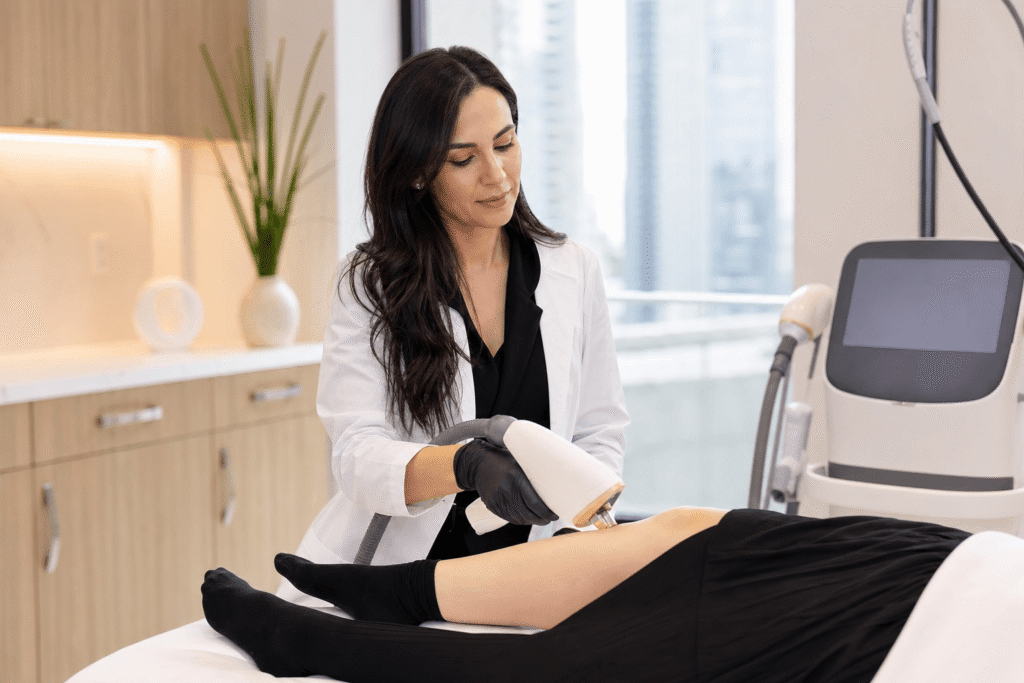
If you’ve just completed a laser hair removal session on your legs, you’re probably wondering whether it’s safe to shave afterward. The short answer is yes, but timing and technique matter significantly. Understanding when and how to shave after laser treatment protects your skin, prevents complications, and ensures you get the best possible results from your sessions. This guide covers everything you need to know about shaving after laser hair removal on your legs, from immediate post-treatment care to the weeks between sessions.
Can I Shave My Legs After Laser Hair Removal? The Quick Answer
Yes, you can shave your legs after laser hair removal. Wait at least 24-48 hours after treatment, then shave gently using a clean razor and mild products. Shaving is the only approved hair removal method between sessions, as it preserves the hair follicle intact for your next treatment.
Key Takeaways
- Wait 24-48 hours before shaving legs after laser treatment sessions
- Shaving preserves follicles while waxing and plucking compromise laser effectiveness
- Use clean sharp razors with gentle products on treated skin
- Expect hair shedding over 10-14 days, not immediate hair loss
- Hormonal factors like PCOS and menstrual cycles affect regrowth timing between sessions
The Detailed Answer: Why Shaving Is Safe After Laser Treatment
Shaving after laser hair removal on your legs is not only allowed, it’s actually the recommended method for managing any hair regrowth between sessions. Unlike waxing, threading, or plucking, shaving doesn’t remove the hair follicle from the root. This matters because laser hair removal works by targeting melanin in the hair follicle beneath your skin’s surface.
When you shave, you’re only cutting hair at the skin’s surface while leaving the follicle intact and accessible for your next laser treatment. At Bright and Beauty Laser Clinic in North York, clients receive detailed aftercare instructions specific to the treatment area, whether that’s full legs or half legs, because proper post-treatment care directly impacts your results.
The key distinction is timing. Your skin needs a brief recovery period immediately after treatment before you introduce a razor. During a laser session, the targeted hair follicles absorb light energy, which converts to heat and damages the follicle’s ability to produce hair. This process creates temporary inflammation in the treated area.
Shaving too soon can irritate already-sensitive skin. But waiting too long isn’t necessary either, and many clients find they need to shave less frequently after just a few sessions as hair growth slows dramatically.
We advise our North York clients to use an electric razor for the first shave after treatment. It reduces direct blade contact with sensitive skin while still removing visible hair effectively during the initial recovery period.
When to Shave After Laser Hair Removal: Timing Guidelines for Legs
Timing is everything when it comes to shaving after laser hair removal. The treated area goes through distinct phases of healing and hair shedding, and understanding this timeline helps you make smart decisions about when to reach for your razor.
First 48-72 Hours After Treatment
Your skin needs immediate recovery time after laser treatment. Most clients experience mild redness and sensitivity similar to a sunburn for the first 24-48 hours. This is completely normal, it’s your skin’s inflammatory response to the laser energy absorbed by hair follicles.
During this window, avoid shaving entirely. The combination of sensitive skin and razor friction increases your risk of irritation, razor burn, and potential infection. Instead, focus on cooling and soothing the treated area with aloe vera gel or a cold compress.
After 48 hours, most clients find their skin has returned to normal appearance and sensation. That’s your green light to shave if needed, though many people don’t need to yet because the hair is still processing the treatment.
Day-by-Day Timeline: What to Expect Week 1-2
Understanding what happens to your leg hair after laser treatment helps you know when shaving makes sense. Here’s the typical progression:
| Timeline | What’s Happening | Shaving Status |
|---|---|---|
| Day 1-2 | Redness and sensitivity, treated hair still in follicles | Avoid shaving, focus on cooling and moisturizing |
| Day 3-5 | Skin normalized, some hair may appear to grow (actually pushing out) | Safe to shave gently if needed |
| Day 5-10 | Hair shedding phase begins, stubble easily wipes away | Light shaving okay, many hairs fall out naturally |
| Day 10-14 | Most treated hair has shed, skin smooth | Minimal shaving needed, only for stray hairs |
| Week 3-6 | Hair-free period, new growth cycle hasn’t started | Little to no shaving required |
This timeline varies based on individual factors like hair thickness, growth cycle phase, and hormonal influences. Clients treating their legs at professional full legs laser hair removal sessions typically see more dramatic shedding because legs have some of the longest growth cycles of any body area.
Ready to book your treatment?
Visit Soraya and the team at our North York clinic for a personalized consultation and professional laser or facial treatment.
How to Shave Your Legs Safely After Laser Treatment
Post-laser skin requires a gentler approach than your typical shaving routine. The hair follicles have just been heated, your skin barrier may be slightly compromised, and you want to avoid introducing irritation or infection during the healing window.
Step-by-Step Shaving Guide for Post-Laser Skin
Follow this approach for the safest, most comfortable shave after your laser treatment:
Start with clean skin. Wash your legs with lukewarm water and a gentle, fragrance-free cleanser. Hot water can increase sensitivity on recently treated skin, so keep the temperature moderate.
Apply a thick layer of shaving cream or gel. Skip products with strong fragrances, alcohol, or exfoliating ingredients like glycolic acid. Your skin doesn’t need additional stimulation right now. A simple, moisturizing formula works best.
Use a clean, sharp razor. Dull blades require more pressure and multiple passes, both of which increase irritation risk. A fresh blade glides smoothly with minimal friction.
Shave in the direction of hair growth for your first post-treatment shave. Yes, this might not give you the closest shave, but it significantly reduces the chance of razor burn and ingrown hairs on sensitive skin. You can return to your normal technique once your skin is fully recovered.
Rinse with cool water. This helps close pores and calm any minor irritation from the razor.
Pat dry gently, never rub. Then apply a fragrance-free moisturizer to seal in hydration and support your skin barrier.
We recommend clients keep a dedicated, fresh razor specifically for post-laser shaving. This prevents cross-contamination from bathroom bacteria and ensures you’re always using a sharp blade on treated skin during the sensitive healing phase.
Why Shaving Is Allowed But Waxing and Plucking Are Not Between Sessions
This distinction confuses many people, but it’s fundamental to how laser hair removal works. The laser targets melanin in the hair follicle, which sits beneath your skin surface. For each session to be effective, that follicle needs to be present and intact.
Shaving cuts hair at the surface while leaving the follicle undisturbed below. The root remains in place, complete with its melanin content, ready to absorb laser energy during your next treatment. Think of it like cutting grass: you’re trimming what’s visible while leaving the root system intact.
Waxing, plucking, threading, and sugaring all remove hair from the root. This pulls the entire follicle out of the skin, including the melanin-rich portion the laser needs to target. When you arrive for your next session with waxed or plucked areas, there’s nothing for the laser to target. You’ve essentially wasted that treatment window.
The hair growth cycle adds another layer of complexity. Hair grows in phases: anagen (active growth), catagen (transition), and telogen (resting). Laser only works effectively on hairs in the active anagen phase when they’re connected to blood supply and melanin production is highest.
When you remove hair by the root, you disrupt this cycle. New hair that grows back might be in a different phase, or the follicle might remain dormant for weeks. This unpredictability makes it impossible to optimize treatment timing. For comprehensive guidance on what to do before starting treatment, our complete pre-treatment preparation guide covers the transition away from waxing in detail.
Understanding Hair Shedding and Stubble After Laser Treatment on Legs
One of the most common sources of confusion after laser hair removal is the appearance of continued hair growth in the first week or two after treatment. You might see stubble emerging and think the treatment didn’t work. Actually, what you’re seeing is the shedding phase.
During your laser session, the hair shaft was still in the follicle. The laser damaged the follicle, but the actual hair strand remains physically present. Over the following 7-14 days, these treated hairs are pushed out of the follicle as your skin naturally exfoliates and the damaged follicle releases its contents.
This process can look like growth, but it’s actually elimination. You might notice the hair feels different: coarser, stubbly, or like it’s not growing smoothly. That’s because these are dead hairs being expelled, not new growth.
Many clients find that around day 5-10 after treatment, the stubble practically falls out with minimal effort. You can gently wipe your leg with a washcloth in the shower and see hairs come away. This is normal and encouraged. You can shave these shedding hairs, or you can let them fall out naturally.
The smooth period comes next. After shedding completes, most clients enjoy 2-4 weeks of completely smooth, hair-free legs before the next growth cycle begins. This hair-free window gets progressively longer with each treatment session as more follicles are permanently disabled.
Legs present unique shedding patterns compared to other body areas. Because leg hair tends to be finer on some areas (like the front of the shin) and coarser on others (like the back of the thigh), shedding may appear uneven. The larger surface area of legs also means shedding happens in waves across different zones. Hair on the lower legs often sheds faster than thigh hair due to differences in blood flow and hair thickness. This doesn’t indicate treatment failure, it reflects natural variation in hair characteristics across different zones of your legs. Whether you’re treating your half legs or full legs, expect this natural variation and be patient as different areas complete their shedding cycles.
What to Avoid After Laser Hair Removal on Your Legs
Shaving is allowed, but several other activities and products should stay off limits while your skin recovers from laser treatment. These restrictions protect your results and prevent complications.
Sun exposure ranks as the top thing to avoid. Freshly treated skin is more vulnerable to UV damage, and sun exposure increases your risk of hyperpigmentation, especially on skin tones with more natural melanin. If you must be outdoors, wear SPF 50+ sunscreen on treated areas and reapply every two hours. Better yet, keep your legs covered with lightweight, breathable clothing for the first week after treatment.
Hot water and heat exposure can aggravate post-treatment inflammation. Skip hot baths, saunas, steam rooms, and hot tubs for at least 48 hours after your session. The heat dilates blood vessels and can worsen redness and swelling. Lukewarm showers are fine and won’t interfere with your results.
Tight clothing creates friction against sensitive skin. For the first day or two after treatment, opt for loose pants, skirts, or dresses that don’t rub against your legs. Synthetic fabrics that trap heat should be avoided in favor of breathable cotton or linen.
Swimming pools and ocean water introduce bacteria and chemicals to skin that’s temporarily more vulnerable to infection. Chlorine and salt water can also be irritating to recently treated skin. Wait at least 48 hours before swimming.
Perfumed lotions, body sprays, and heavily scented products can trigger irritation or allergic reactions on sensitive post-laser skin. Stick with fragrance-free, hypoallergenic products for at least a week after treatment.
Vigorous exercise that causes heavy sweating should be postponed for 24-48 hours. Sweat can irritate treated follicles and increase infection risk if it accumulates on sensitive skin. Light activity like walking is fine, but save the intense leg workouts for a few days post-treatment.
Exfoliating scrubs, loofahs, and chemical exfoliants are too harsh for newly treated skin. Your skin will naturally shed treated hairs without aggressive exfoliation. Adding extra physical or chemical exfoliation only increases irritation risk.
Common Shaving Mistakes That Can Compromise Your Laser Results
Even though shaving is approved after laser hair removal, certain mistakes can interfere with your results or cause unnecessary complications. Avoiding these common errors protects your investment in treatment.
Shaving too soon is mistake number one. The temptation to remove visible hair immediately after treatment is strong, but your skin needs recovery time first. Shaving in the first 24-48 hours while your skin is still inflamed increases irritation, razor burn, and even infection risk. Wait until redness has completely resolved.
Using dull or dirty razors introduces bacteria to skin with temporarily compromised barrier function. Clients who reuse old razors or don’t rinse them properly between strokes have higher rates of folliculitis, small infected bumps that develop around hair follicles. Always start with a clean, sharp blade.
Dry shaving or using inadequate lubrication creates excessive friction. Some people shave quickly in the shower without proper shaving cream, thinking it’s fine because the skin is wet. But water alone doesn’t provide enough glide, and the extra friction on post-laser skin can cause significant irritation.
Shaving against the grain too aggressively might give you a closer shave, but it dramatically increases the risk of ingrown hairs on treated skin. The laser-treated follicles are already dealing with inflammation, and adding trauma from aggressive against-the-grain shaving can push hairs to grow sideways under the skin instead of emerging normally.
Forgetting to moisturize after shaving leaves your skin barrier compromised. Post-laser skin needs extra hydration support to heal properly. Skipping moisturizer, especially in dry climates or during winter months, can lead to flaking, itching, and delayed healing.
Switching back to waxing, even once, between laser sessions resets your progress on those follicles. One client who carefully followed all aftercare advice for five sessions decided to wax a small missed spot rather than shaving it. That area required two additional treatments to catch up with the rest of her legs because the waxing pulled out follicles that should have been targeted in her next scheduled session.
How Hormonal Factors Affect Shaving Needs Between Sessions
Your hormones significantly influence how often you’ll need to shave between laser treatments, even as the laser progressively reduces hair growth. Understanding these factors helps set realistic expectations for your treatment timeline.
Polycystic ovary syndrome (PCOS) affects hair growth patterns due to elevated androgen levels. Women with PCOS often experience faster, coarser hair regrowth between sessions and may need more total treatments to achieve desired results. If you have PCOS, you might find yourself shaving more frequently in the early stages of treatment compared to someone without hormonal influences on hair growth. The excess androgens stimulate hair follicles even after laser damage, meaning more sessions are needed to permanently disable these hormonally-driven follicles.
Menstrual cycle fluctuations cause temporary changes in hair growth rate. Estrogen and progesterone levels rise and fall throughout your cycle, and some clients notice slightly faster regrowth in the week before their period. This is normal and doesn’t mean your laser treatments aren’t working. It’s simply hormonal stimulation of follicles that haven’t been permanently disabled yet. During the luteal phase (days 15-28), increased progesterone can trigger temporary hair growth spurts.
Medications that affect hormone levels can influence results. Birth control pills, hormone replacement therapy, thyroid medications, and certain antidepressants all have potential impacts on hair growth. If you start or stop any hormonal medication during your laser treatment series, mention it to your specialist. Adjustments to treatment intervals or session count might be beneficial. Medications containing corticosteroids or testosterone can particularly affect hair regrowth patterns.
Pregnancy and postpartum periods bring dramatic hormonal shifts. While laser hair removal during pregnancy isn’t recommended, many women complete most of their treatment series before conceiving or after they finish breastfeeding. Postpartum hormonal changes can temporarily increase hair growth, which means you might need maintenance sessions after your body stabilizes, typically 6-12 months after delivery.
Thyroid disorders, both hypothyroidism and hyperthyroidism, affect hair growth cycles. Clients with thyroid conditions may experience either slower results requiring more sessions, or faster results if their medication optimizes hormone levels during treatment. Hypothyroidism can slow hair growth overall, while hyperthyroidism may accelerate it.
These hormonal factors don’t prevent laser hair removal from working. They simply mean that your personal timeline and shaving frequency between sessions might differ from someone else’s experience. Discussing your medical history during your consultation helps set accurate expectations for your individual treatment journey. To better understand the full treatment timeline, including how hormonal factors play into session scheduling, review our guide on how many sessions are needed for laser hair removal.
Shaving Legs Versus Other Body Areas After Laser Treatment
While the basic principles of post-laser shaving apply across all body areas (wait 24-48 hours, use clean tools, shave gently), legs have specific characteristics that affect your shaving experience compared to other treatment zones.
Legs have larger surface area than most body zones, which means more area to manage during the shedding phase. The varied hair characteristics across legs also create different experiences. Shin hair tends to be finer and sheds more quickly, while thigh hair, especially on the back of thighs, is often coarser and takes longer to shed completely.
Legs tolerate shaving better than more delicate areas. The skin on your legs is thicker and less sensitive than facial skin or the bikini area, where extra caution is needed with razor pressure and product selection. This makes legs more forgiving if you need to shave sooner than 48 hours in an emergency, though waiting is still recommended.
The underarm area requires different handling due to the thin, folded skin and higher concentration of sweat glands. You need to shave in multiple directions to catch all the hair due to the curved surface, and the risk of irritation is higher. Our guide on shaving underarms after laser treatment provides specific techniques for that delicate zone.
Bikini area skin is extremely sensitive and prone to ingrown hairs. The hair is typically much coarser than leg hair, and the skin is thinner. Post-laser shaving in the bikini area requires extra gentle techniques, high-quality razors, and careful attention to product ingredients to avoid irritation. The curved, hard-to-reach angles also make proper shaving technique more challenging than the relatively flat surfaces of legs.
Facial hair demands the most caution due to visibility and skin sensitivity. Any irritation, ingrown hairs, or complications on the face are immediately noticeable and harder to conceal. Facial skin is also more prone to hyperpigmentation if irritated, particularly on darker skin tones. The thinner, more delicate facial skin requires lighter pressure and gentler products than you would use on legs.
Understanding these area-specific differences helps you adjust your technique appropriately. Legs generally provide the easiest, most straightforward post-laser shaving experience due to thicker skin, larger surface area, and less sensitivity compared to facial, underarm, and bikini zones.
Frequently Asked Questions
Can I shave immediately after laser hair removal on my legs?
No, wait at least 24-48 hours before shaving after laser treatment. Your skin needs time to recover from the inflammatory response triggered by the laser energy. Shaving immediately can cause irritation and increase infection risk.
How long should I wait before shaving my legs after laser treatment?
The recommended waiting period is 48-72 hours after your laser session. This allows post-treatment redness and sensitivity to fully resolve. If you still notice redness or discomfort after 48 hours, wait another day before shaving.
Will shaving between laser sessions affect my hair removal results?
No, shaving between sessions does not negatively affect your results. Unlike waxing or plucking, shaving only removes hair at the surface while leaving the hair follicle intact beneath your skin, which the laser needs to target.
Why am I still seeing hair on my legs after my laser treatment?
What you’re seeing is likely the shedding phase, not new growth. The hair shaft remains in the follicle immediately after treatment. Over 7-14 days, these treated hairs are pushed out as your skin naturally exfoliates.
Can I wax or pluck hair on my legs between laser hair removal sessions?
No, never wax, pluck, or thread between laser sessions. These methods remove hair from the root, pulling out the entire follicle that the laser needs to target during your next treatment, making that session ineffective.
Professional Aftercare Support for Laser Hair Removal in North York
Understanding proper aftercare, including when and how to shave, directly impacts your laser hair removal results. The guidance in this article reflects professional standards practiced at clinics specializing in laser treatments, where personalized aftercare instructions are provided based on your specific treatment area, skin type, and individual response.
Ready to start your journey to smooth, hair-free legs? The team at Bright and Beauty Laser Clinic in North York provides comprehensive laser hair removal services with detailed aftercare support for every client. Whether you’re treating full legs, half legs, or combining multiple areas, you’ll receive personalized guidance to protect your investment and optimize your results. Book your consultation today by calling (416) 666-4500 or visiting us at our Toronto location to discuss your goals and create a customized treatment plan.