Laser Hair Removal for Dark Skin: Safe, Effective Treatment Guide for 2026
Laser hair removal for dark skin requires specialized technology and expertise that was not widely available until recent years. If you have melanin-rich skin and you are researching whether laser hair removal is safe for you, the answer is yes, but only when performed with the right equipment and proper protocols. This guide covers everything you need to know: why Nd:YAG laser technology made safe treatment possible for darker skin tones, what safety protocols protect against hyperpigmentation, how to identify qualified providers, and what to expect throughout your treatment journey.
Throughout Toronto’s diverse communities, including North York, more people with darker skin tones are discovering that professional laser hair removal can finally address stubborn ingrown hairs, razor bumps, and unwanted hair without the risks that older laser technologies posed.
Quick Answer
Laser hair removal is safe and effective for dark skin when performed with Nd:YAG laser technology at properly adjusted settings. The 1064nm wavelength penetrates deeper to target hair follicles while minimizing melanin absorption in the epidermis, reducing hyperpigmentation risk.
Is Laser Hair Removal Safe for Dark Skin? The Complete Answer
Yes, laser hair removal is safe for Black skin and darker skin tones when three critical conditions are met: the provider uses an Nd:YAG laser specifically designed for high melanin content, they adjust settings based on your exact Fitzpatrick skin type, and they perform a mandatory test patch before full treatment.
The safety concern is not hypothetical. Darker skin contains more melanin throughout the epidermis, not just in the hair follicle. Older laser technologies could not differentiate between the melanin in your skin and the melanin in the hair shaft. This caused the laser to heat both simultaneously, leading to burns, blistering, and post-inflammatory hyperpigmentation.
Modern Nd:YAG lasers solve this problem through wavelength selection. The 1064nm wavelength penetrates deeper into the dermis, reaching the hair follicle while causing minimal heating in the melanin-rich epidermis above it.
At Bright and Beauty Laser Clinic in North York, Soraya uses Fitzpatrick scale assessment during every consultation to determine exact skin type classification. Toronto’s multicultural community means treating diverse skin tones is not an occasional specialty but a daily practice. Clients with Fitzpatrick types IV, V, and VI receive customized treatment protocols that account for melanin density, hair texture, and individual sensitivity factors.
Key Takeaways
- Verify clinics use Nd:YAG laser technology before booking any consultation
- Expect mandatory test patches for darker skin tones before full treatment
- Understand that proper settings adjustment prevents hyperpigmentation and burns
- Choose providers with documented experience treating Fitzpatrick types IV-VI
- Follow melanin-specific aftercare protocols to optimize healing and results
Why Dark Skin Was Historically Excluded from Laser Hair Removal
The first laser hair removal systems, approved in the mid-1990s, were designed and tested almost exclusively on lighter skin tones. These early technologies used shorter wavelengths between 694nm and 755nm that could not penetrate deeply enough without heating surface melanin.
Alexandrite lasers (755nm) and ruby lasers (694nm) became the gold standard for fair skin because they effectively targeted the contrast between light skin and dark hair. But that same contrast became a liability for darker skin. The laser could not distinguish between melanin in the epidermis and melanin in the hair follicle, so it heated everything.
Medical literature from that era is filled with case studies documenting burns, hyperpigmentation, and keloid scarring in patients with Fitzpatrick types IV through VI. Many clinics simply excluded darker-skinned clients entirely rather than risk complications. That changed completely when Nd:YAG systems entered the market.
How Nd:YAG Laser Technology Changed Everything for Darker Skin Tones
Nd:YAG laser technology uses a fundamentally different wavelength that made safe treatment possible for melanin-rich skin. The 1064nm wavelength has lower melanin absorption in the epidermis but maintains effective absorption in the hair follicle. When the laser pulse hits your skin, the wavelength passes through the melanin-rich epidermis with minimal interaction, then concentrates its energy in the hair shaft and follicle beneath. The melanin in the hair still absorbs the energy and converts it to heat, destroying the follicle’s growth capacity. But the surrounding skin stays relatively cool because the wavelength largely bypasses surface melanin.
Nd:YAG vs IPL, Alexandrite, and Diode Lasers for Dark Skin
| Technology | Wavelength | Safe for Dark Skin | Why or Why Not |
|---|---|---|---|
| Nd:YAG Laser | 1064nm | Yes (Fitzpatrick IV-VI) | Deep penetration with minimal epidermal melanin absorption |
| Diode Laser | 810nm | Limited (Fitzpatrick IV only) | Moderate melanin absorption requires extreme caution on darker tones |
| Alexandrite Laser | 755nm | No (Fitzpatrick I-III only) | High melanin absorption causes burns and hyperpigmentation on dark skin |
| IPL (Intense Pulsed Light) | 500-1200nm (broad spectrum) | No (unreliable for any dark skin) | Unfocused light energy with inconsistent melanin targeting |
IPL deserves special mention because it is often marketed as laser hair removal when it is technically not a laser at all. IPL uses broad-spectrum light that scatters energy across multiple wavelengths, making it inherently unpredictable on dark skin.
Ready to book your treatment?
Visit Soraya and the team at our North York clinic for a personalized consultation and professional laser or facial treatment.
Safety Protocols That Protect Dark Skin: Test Patches and Setting Adjustments
Having the right laser is necessary but not sufficient. Safe treatment for dark skin requires specific protocols that qualified providers follow without exception.
Why Test Patches Are Non-Negotiable for Darker Skin Tones
A test patch is a small treatment area, typically about the size of a quarter, performed at your first visit to assess your skin’s individual response. For darker skin tones, this is not a precaution, it is a requirement.
Even within the same Fitzpatrick classification, individual skin responds differently to laser energy. Factors like underlying inflammation, recent sun exposure, medication use, and natural melanin distribution patterns all affect how your skin reacts. A test patch reveals your specific response before treating large areas.
The test patch should be performed at the same settings planned for your full treatment, on an area that matches the treatment site’s characteristics. You will return 7-10 days later so the provider can assess the test site. They are looking for appropriate hair shedding without hyperpigmentation, burns, or excessive inflammation.
At Bright and Beauty Laser Clinic, Soraya performs test patches on every new client with Fitzpatrick type IV or darker before scheduling full treatments.
How Laser Settings Are Adjusted for Fitzpatrick Types IV, V, and VI
Laser settings are not just high or low. Three primary parameters are adjusted based on skin type: fluence (energy level), pulse duration, and spot size.
| Fitzpatrick Type | Fluence Range (J/cm²) | Pulse Duration | Treatment Approach |
|---|---|---|---|
| Type IV (moderate brown) | 20-30 J/cm² | Long pulse (30-50ms) | Conservative initial settings with gradual increases |
| Type V (dark brown) | 18-26 J/cm² | Long pulse (40-60ms) | Lower fluence with longer cooling intervals between pulses |
| Type VI (deeply pigmented) | 15-22 J/cm² | Very long pulse (50-100ms) | Maximum pulse duration with minimum effective fluence |
Longer pulse durations give the epidermis more time to cool between the laser energy reaching the surface and reaching the hair follicle beneath. This thermal relaxation time is critical for darker skin because it prevents heat accumulation in melanin-rich epidermis.
We adjust settings conservatively for the first session, then gradually increase fluence in subsequent sessions once we have confirmed your skin tolerates treatment well. This ramping approach takes slightly longer to achieve final results but dramatically reduces complication risk compared to starting at maximum settings.
What to Expect During Laser Hair Removal Treatment for Dark Skin
The treatment experience for darker skin tones differs from lighter skin in several important ways, mostly related to the longer session times and more conservative approach.
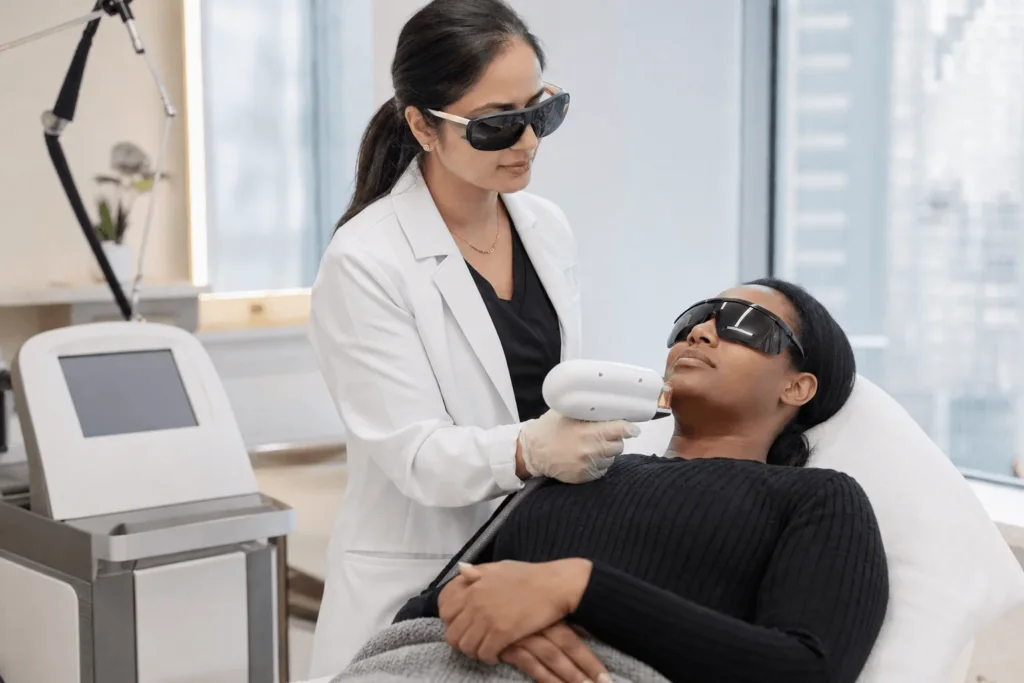
Before the laser touches your skin, your provider should clean the treatment area and apply a thin layer of ultrasound gel that helps the laser handpiece glide smoothly. Some clinics use topical numbing cream for sensitive areas like the bikini line or facial treatment areas, though Nd:YAG lasers with proper cooling typically cause less discomfort than shorter wavelength systems.
During treatment, you will feel each laser pulse as a warm snapping sensation. With Nd:YAG technology at dark skin settings, most clients describe it as noticeably warm but not painful. The cooling system delivers a cold burst immediately before each pulse, which helps considerably with comfort.
Session duration varies by treatment area. Small areas like the upper lip take 10-15 minutes, while larger areas like full legs can take 60-90 minutes. Darker skin treatments typically take 20-30 percent longer than lighter skin treatments because the provider moves more slowly and allows longer cooling intervals between pulses.
Immediately after treatment, the area will appear slightly red with possible mild swelling around each hair follicle. This is normal inflammation indicating that follicles absorbed the laser energy. With proper settings on dark skin, this redness should resolve within 2-4 hours, not persist for days.
Hair shedding begins 7-14 days after treatment as damaged follicles push out the hair shaft. You will notice hairs that look like they are growing but actually pull out easily when you gently exfoliate. Do not pick at or forcefully pluck these hairs.
Healing Time and Downtime: Dark Skin vs Light Skin Comparison
| Recovery Aspect | Dark Skin (Fitzpatrick IV-VI) | Light Skin (Fitzpatrick I-III) |
|---|---|---|
| Post-treatment redness | 2-4 hours typical | 1-2 hours typical |
| Hair shedding begins | 10-14 days | 7-10 days |
| Return to exercise | 48 hours recommended | 24 hours usually safe |
| Hot shower avoidance | 48-72 hours | 24 hours |
| Sessions required | 7-10 sessions average | 6-8 sessions average |
| Interval between sessions | 6-8 weeks | 4-6 weeks |
How to Choose a Qualified Clinic for Dark Skin Laser Hair Removal
The clinic you choose matters more for dark skin than for any other skin tone. A mediocre provider using inadequate technology on dark skin can cause permanent scarring and hyperpigmentation.
Red Flags That Signal Inadequate Experience with Dark Skin
Watch for these warning signs during your research and consultation:
- No mention of specific laser type: If the website or staff cannot immediately tell you they use Nd:YAG technology, they are either using inappropriate equipment or do not understand why it matters.
- One laser does all skin types claims: This is technically true only for Nd:YAG systems. If they are promoting versatility without specifying Nd:YAG, they likely use diode or IPL systems that are not appropriate for darker tones.
- Skipping the test patch: Any provider who suggests starting with full treatment on dark skin without a test patch is cutting corners that put your skin at risk.
- No Fitzpatrick scale assessment: If the consultation does not include formal skin type classification, the provider is not following proper protocols for melanin-rich skin.
- Portfolio shows only light skin results: Before and after photos should include results on skin tones similar to yours, demonstrating actual experience treating diverse clients.
- Rushed consultations: Providers who spend less than 15 minutes on initial assessments are not taking the time needed to evaluate melanin-rich skin properly.
- Price seems too good to be true: Dramatically lower prices often indicate older equipment, undertrained staff, or corner-cutting on safety protocols.
Green Flags: What Qualified Providers Do Differently
Qualified clinics demonstrate their expertise through specific practices:
- Immediate technology transparency: They prominently feature Nd:YAG laser specifications on their website and in initial conversations, understanding this is the first question informed clients ask.
- Detailed consultation process: They spend real time assessing your specific skin characteristics, medical history, and previous hair removal experiences rather than rushing through intake.
- Mandatory test patch protocol: They explain why test patches matter and build them into the treatment timeline without making you feel like you are being difficult for requesting one.
- Specific experience with your skin type: They should comfortably discuss treating clients with your exact Fitzpatrick type and reference specific protocols they follow for melanin-rich skin.
- Comprehensive aftercare guidance: They provide detailed, melanin-specific aftercare instructions that address hyperpigmentation prevention, not generic post-treatment advice.
- Diverse portfolio: Before and after photos prominently feature results on darker skin tones, proving regular experience with melanin-rich clients.
In North York and throughout Toronto’s diverse communities, qualified clinics treat darker skin tones regularly, not occasionally. At Bright and Beauty Laser Clinic, the client base reflects the surrounding multicultural neighborhoods, meaning experience with Fitzpatrick types IV through VI is not specialty work but daily practice.
Aftercare for Dark Skin: Preventing Hyperpigmentation and Optimizing Results
Aftercare is where many complications occur with darker skin, even when the treatment itself was performed correctly. Post-inflammatory hyperpigmentation remains the most common complication for melanin-rich skin, and it is largely preventable with proper care.
Immediately after treatment, apply a cold compress to the treated area for 10-15 minutes to reduce inflammation. Continue cold compresses every few hours for the first 24 hours if you experience any warmth or swelling.
Avoid hot showers, saunas, steam rooms, and vigorous exercise for 48 hours after treatment. Heat increases inflammation, and inflammation triggers melanocyte activity in dark skin, potentially causing the hyperpigmentation you are trying to avoid. This waiting period is longer than the 24-hour recommendation for lighter skin tones because melanin-rich skin has a more pronounced inflammatory response.
Sun Protection Protocol for Melanin-Rich Skin After Treatment
Sun protection becomes absolutely critical after laser treatment on dark skin. While darker skin has natural sun protection from higher melanin levels, laser-treated skin is temporarily more vulnerable to UV damage. More importantly, UV exposure on inflamed skin dramatically increases hyperpigmentation risk.
Use broad-spectrum SPF 30 or higher daily on treated areas, even if they are typically covered by clothing. Reapply every two hours if you are spending extended time outdoors. This sun protection protocol should continue for at least four weeks after each treatment session, ideally longer if you are treating visible areas like the face or underarms.
Avoid picking, scratching, or aggressive exfoliation of treated areas while hair is shedding. Let the hair release naturally. Forced removal or harsh scrubbing can cause micro-trauma that triggers hyperpigmentation in dark skin.
If you notice any darkening of the treated skin beyond the immediate post-treatment redness, contact your provider immediately. Early-stage hyperpigmentation responds much better to intervention than established pigmentation. Your provider may recommend gentle brightening serums or temporary treatment adjustment, but never attempt to treat hyperpigmentation yourself without professional guidance.
Moisturizing and Skin Barrier Protection for Optimal Healing
Maintaining your skin barrier is essential for preventing post-inflammatory hyperpigmentation in darker skin tones. Use a gentle, fragrance-free moisturizer twice daily on treated areas for at least two weeks after each session. Look for ingredients like ceramides, hyaluronic acid, and niacinamide that support barrier function without irritating treated skin.
Avoid products containing retinoids, acids (AHA, BHA, glycolic), or vitamin C serums on treated areas for one week after treatment. These active ingredients can increase sensitivity and inflammation risk during the healing period.
For clients treating areas prone to hyperpigmentation like the bikini line or facial areas, Bright and Beauty Laser Clinic provides detailed written aftercare instructions specific to your skin type and treatment area. These are not generic handouts but customized protocols that account for your individual skin characteristics and the specific areas being treated.
Frequently Asked Questions
Is laser hair removal safe for Black skin and darker skin tones?
Yes, laser hair removal is safe for Black skin when performed with Nd:YAG laser technology at properly adjusted settings. The 1064nm wavelength targets hair follicles while minimizing melanin absorption in the epidermis, reducing burn and hyperpigmentation risk. Choose a qualified provider who uses appropriate technology and follows safety protocols including test patches and Fitzpatrick scale assessment.
What type of laser is best for dark skin?
Nd:YAG laser is the best option for dark skin, specifically for Fitzpatrick types IV, V, and VI. The 1064nm wavelength penetrates deeply with minimal heating of surface melanin, unlike shorter wavelengths used by Alexandrite or diode lasers. IPL systems should be avoided entirely on darker skin tones as they use unfocused broad-spectrum light that cannot selectively target hair follicles.
Do I really need a test patch before laser hair removal on dark skin?
Yes, test patches are necessary for darker skin tones before full treatment. Individual skin responds differently to laser energy based on melanin distribution, inflammation, and sensitivity. The test patch should be performed at planned treatment settings, then assessed 7-10 days later to confirm appropriate response without hyperpigmentation before proceeding with larger areas.
Will laser hair removal help with ingrown hairs on dark skin?
Yes, laser hair removal is highly effective for preventing ingrown hairs on dark skin. Ingrown hairs occur when curved hair shafts grow back into the skin after shaving or waxing, causing inflammation and hyperpigmentation. Laser hair removal destroys the hair follicle entirely, eliminating the root cause. Most clients notice significant improvement after 2-3 sessions.
How many sessions does laser hair removal take for darker skin tones?
Laser hair removal typically requires 7-10 sessions for darker skin tones, compared to 6-8 for lighter skin. Additional sessions are needed because Nd:YAG settings for dark skin use lower fluence to minimize hyperpigmentation risk, meaning each session disables slightly fewer follicles. Sessions are spaced 6-8 weeks apart to target hair during active growth phase.
Can laser hair removal cause hyperpigmentation on dark skin?
Laser hair removal can cause hyperpigmentation on dark skin if performed with inappropriate technology, incorrect settings, or inadequate aftercare, but this is preventable. Using Nd:YAG laser at properly adjusted settings for your Fitzpatrick type, combined with strict sun protection and heat avoidance during healing, minimizes this risk. Qualified providers perform test patches to assess individual response before full treatment.
Book Your Dark Skin Laser Hair Removal Consultation in North York
Safe laser hair removal for dark skin requires the right technology combined with expertise in treating melanin-rich skin tones. Soraya and the team at Bright and Beauty Laser Clinic use Nd:YAG laser technology specifically designed for Fitzpatrick types IV through VI, with mandatory test patches and individualized treatment protocols that prioritize safety while delivering effective results. Located in North York, the clinic serves Toronto’s diverse communities with demonstrated experience treating darker skin tones daily.
Ready to address unwanted hair and ingrown hair concerns with technology designed for your skin? Schedule your consultation today to discuss your specific skin type, treatment goals, and receive a personalized assessment. Call (416) 666-4500 or book online to start your laser hair removal journey with a clinic that understands the unique needs of darker skin.