
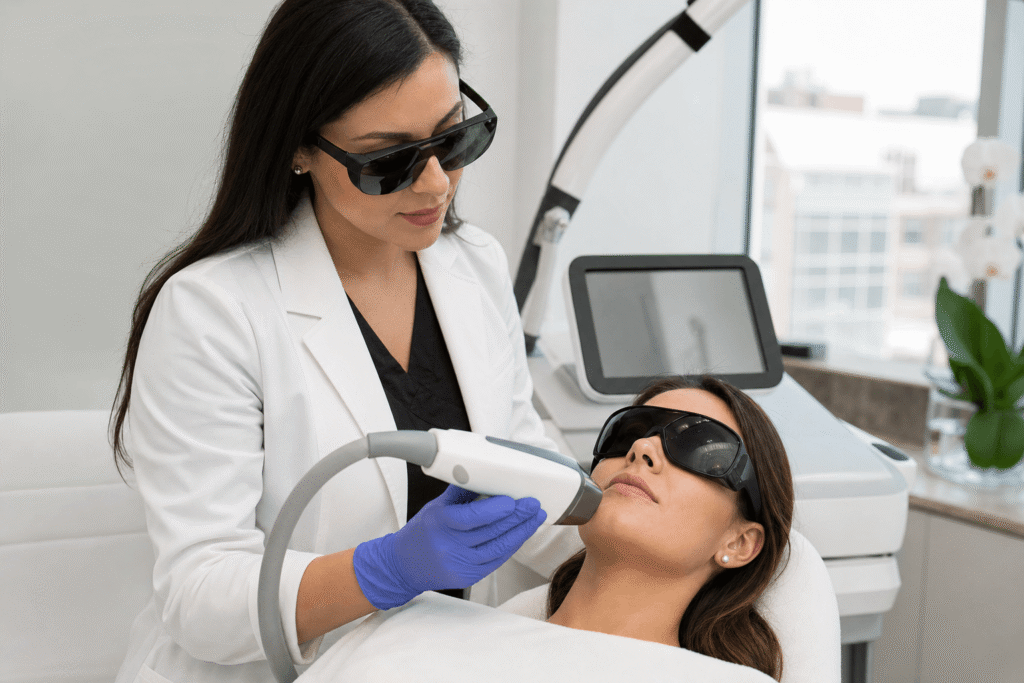
Most people don’t realize that laser hair removal and tattoos don’t mix well. The same melanin-absorbing technology that targets hair follicles can also heat up tattoo ink particles, potentially causing serious complications. If you’ve got body art and unwanted hair in the same area, you’re facing a common aesthetic dilemma that requires careful planning. The interaction between laser wavelengths and tattoo pigments creates risks that go beyond simple discomfort, potentially damaging both your skin and the artwork you’ve invested in. Understanding these risks helps you make informed decisions about hair removal options when tattoos are involved.
Why Laser Hair Removal and Tattoos Don’t Work Together
The fundamental problem lies in how laser technology works. Hair removal lasers emit specific wavelengths designed to target melanin in hair follicles. But tattoo ink contains pigment particles that also absorb these wavelengths.
When laser energy hits tattooed skin, it doesn’t distinguish between hair melanin and ink pigment. The ink particles heat up rapidly, potentially causing burns, blistering, or permanent scarring. This reaction happens within milliseconds of laser contact.
Different ink colors respond differently to various laser wavelengths. Black and dark blue inks absorb nearly all wavelengths, making them particularly reactive during hair removal treatments. At Bright and Beauty Laser Clinic, Soraya adjusts treatment protocols based on the Fitzpatrick scale and carefully maps any tattooed areas during consultations at the North York location, ensuring complete exclusion from treatment zones.
The risk extends beyond immediate burns. Laser heat can fracture ink particles, causing them to migrate through skin layers. This migration often results in blurred edges, color changes, or complete distortion of the original design.
What Happens When Laser Energy Hits Tattoo Ink
The moment laser pulses strike tattoo ink, several reactions occur simultaneously. Ink particles absorb photon energy and convert it to heat within nanoseconds. This rapid heating causes immediate tissue response.
Darker inks reach higher temperatures faster than lighter colors. A black tribal tattoo might experience temperature spikes exceeding 70 degrees Celsius under standard hair removal settings. That’s hot enough to cause third-degree burns in surrounding tissue.
Even professional-grade lasers with precise targeting can’t prevent this reaction. The wavelengths used for full body laser hair removal (typically 755nm alexandrite or 1064nm Nd:YAG) overlap significantly with those used in tattoo removal, but in reverse.
Tattoo removal lasers deliberately fracture ink particles for gradual elimination. Hair removal lasers create the same fracturing effect unintentionally, damaging artwork while failing to achieve effective hair reduction. The thermal damage extends 2-3mm beyond the visible ink boundary, affecting both tattooed and surrounding skin.
During consultations, Soraya photographs all tattoos and marks exclusion zones at least 5mm beyond visible ink borders to prevent accidental exposure during treatments.
Safe Treatment Zones Around Tattooed Areas
Creating proper safety margins requires precision mapping. Professional practitioners establish exclusion zones that account for both visible ink and potential subsurface pigment migration.
The standard safety margin measures at least 5mm from any tattoo edge. For larger pieces or recently completed work, this margin expands to 10mm. Fresh tattoos (less than six months old) require even wider berths, often 15-20mm, because ink particles haven’t fully settled.
Treatment can safely proceed in areas well away from tattooed skin. For example, if you have a shoulder tattoo but want chest laser hair removal, the practitioner maps precise boundaries ensuring no overlap. This mapping happens before every session, not just the initial consultation.
Some body areas present unique challenges. A full-sleeve arm tattoo makes full arms laser hair removal impossible on that limb, though the untattoed arm can receive treatment normally. Similarly, lower back tattoos typically don’t interfere with full legs laser hair removal sessions.
Documentation matters significantly. Practitioners who work carefully photograph tattoos from multiple angles, creating reference images that track any changes between sessions. This documentation protects both client and clinic should complications arise.
Ready to book your treatment?
Visit Soraya and the team at our North York clinic for a personalized consultation and professional laser or facial treatment.
Alternative Hair Removal Methods for Tattooed Skin
When laser treatment isn’t viable, several alternatives provide effective hair reduction without risking tattoo damage. Each method has distinct advantages for maintaining both smooth skin and pristine body art.
Electrolysis stands as the most permanent alternative. This method uses fine needles to deliver electrical current directly to individual follicles, destroying growth cells without affecting surrounding tissue or ink. The precision allows practitioners to work right up to tattoo edges safely.
The process takes longer than laser treatment because each follicle receives individual attention. A small tattooed area might require 10-15 hours total treatment time spread across multiple sessions. But results are genuinely permanent, and tattoos remain completely unaffected.
Waxing and sugaring remain popular temporary options. These methods remove hair at the root without using light energy or heat that could interact with ink. Results last 3-6 weeks depending on hair growth cycles.
Professional waxing over tattooed skin requires specific products. Hard wax formulations work better than strip wax because they grip hair without adhering strongly to skin, reducing trauma to both tattoo and surrounding tissue. Quality matters significantly here.
Depilatory creams offer another chemical option, though results vary. These products dissolve hair at skin level through chemical reactions. Always patch test on tattooed skin first, as some formulations cause irritation or temporary color changes in certain inks.
Timing Considerations for New and Old Tattoos
Tattoo age dramatically affects treatment planning. Freshly inked skin undergoes healing processes that make it particularly vulnerable to laser energy, while older tattoos present different but equally important considerations.
New tattoos require a minimum six-month waiting period before any adjacent laser treatment. During initial healing, ink particles actively migrate through dermal layers as your immune system works to stabilize the pigment. Laser energy during this period creates unpredictable reactions.
The first three months post-tattooing represent peak vulnerability. Skin barrier function hasn’t fully restored, inflammation markers remain elevated, and ink distribution continues shifting. In Toronto’s climate, healing often extends slightly longer during winter months due to reduced humidity and increased indoor heating.
Older tattoos (5+ years) have more stable pigment but aren’t risk-free. Aging ink can fade unevenly, and some particles migrate deeper into dermis over time. What appears as solid black at the surface might have gray undertones beneath that react differently to laser wavelengths.
Cover-up tattoos require extra caution. These pieces contain multiple ink layers at varying depths, creating complex absorption patterns. At Bright and Beauty Laser Clinic in North York, Soraya assesses cover-up work carefully during consultations, often recommending broader exclusion zones around these multi-layered designs to ensure complete safety during nearby hair removal treatments.
We’ve observed that tattoos with white or flesh-toned ink components darken unpredictably when exposed to hair removal lasers, making these designs particularly high-risk for adjacent treatments.
How Tattoo Colors Affect Laser Treatment Safety
Ink color determines absorption characteristics, creating a spectrum of risk levels when laser hair removal occurs nearby. Understanding these differences helps establish appropriate safety protocols.
Black ink presents the highest risk. It absorbs virtually all laser wavelengths used in hair removal, converting maximum light energy to heat. Even brief exposure causes immediate temperature spikes that can burn skin and distort artwork.
Dark blue and dark green inks follow close behind. These colors absorb strongly in the 755nm range (alexandrite laser) commonly used for lighter skin types. The 1064nm wavelength (Nd:YAG) penetrates deeper but still interacts significantly with these pigments.
Red and orange inks show moderate absorption. They react more to certain wavelengths than others, making them somewhat less predictable. Some red inks contain iron oxide, which heats dramatically under laser exposure, while others use organic compounds that react mildly.
Yellow and light pastel inks generally absorb less laser energy. However, they’re not risk-free. White ink deserves special mention because it often contains titanium dioxide or zinc oxide, compounds that can oxidize and darken permanently when heated by laser energy.
Multi-colored tattoos require individualized assessment. A sleeve combining black outlines, red fills, and yellow highlights needs different safety margins for each color zone. Professional practitioners map these variations precisely.
Medical Risks and Complications to Understand
Beyond cosmetic concerns, treating tattooed skin with hair removal lasers carries genuine medical risks. These complications range from minor irritation to serious injury requiring medical intervention.
Thermal burns represent the most immediate danger. When laser energy super-heats ink particles, surrounding tissue sustains burns that can reach second or third degree severity. These burns often extend deeper than surface damage suggests because ink particles sit within dermal layers.
Scarring frequently follows thermal injury. The body’s healing response to deep burns produces collagen deposits that alter skin texture permanently. Raised (hypertrophic) scars or depressed (atrophic) scars both occur, sometimes within the same treatment area.
Hyperpigmentation and hypopigmentation develop when melanocytes (pigment-producing cells) sustain damage. Dark patches (hyperpigmentation) result from inflammatory responses, while light patches (hypopigmentation) indicate melanocyte destruction. Both conditions can persist for years or become permanent.
Allergic reactions sometimes emerge after laser exposure to tattoo ink. Heat-altered ink particles can trigger immune responses that didn’t exist before treatment. These reactions manifest as itching, swelling, raised bumps, or chronic inflammation around the tattoo.
Ink migration causes visual distortion. Laser energy fragments stable ink particles, allowing them to spread through tissue. Colors blur, edges soften, and detailed work loses definition. This damage cannot be reversed without professional tattoo correction, which adds significant cost.
Infection risk increases when skin barrier integrity breaks down. Burns and blisters create entry points for bacteria, potentially leading to cellulitis or more serious infections requiring antibiotic treatment.
Key Takeaways
- Avoid laser hair removal directly over tattoos to prevent permanent damage
- Maintain minimum 5mm safety margins around all tattooed areas during treatment
- Wait at least six months after getting new tattoos before nearby treatments
- Choose electrolysis for permanent hair removal directly over tattooed skin safely
- Verify your practitioner photographs and maps all tattoos before each session
- Expect different risks with different ink colors during adjacent laser treatments
Frequently Asked Questions
Protecting both your skin and body art requires informed decision-making about hair removal methods. Soraya and the team at Bright and Beauty Laser Clinic bring extensive experience treating diverse skin types and navigating complex situations involving tattoos, ensuring every client receives safe, effective care tailored to their unique needs.
Ready to discuss your specific situation and explore safe hair removal options? Book a consultation at our North York location where we’ll assess your tattoos, map treatment zones precisely, and create a customized plan that achieves your goals without compromising your body art.