
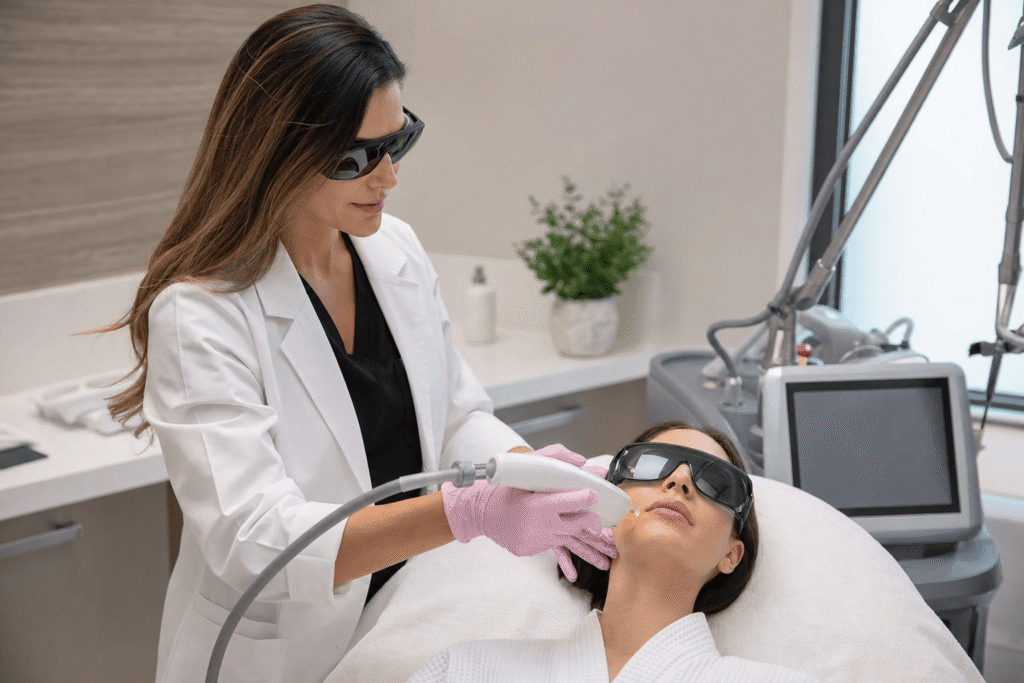
Here’s something most clinics won’t tell you upfront: applying makeup too soon after laser hair removal can trap bacteria against freshly treated skin, turning a routine cosmetic choice into a genuine complication. The timing matters more than you think. Within the first 24 to 48 hours after your session, your skin behaves differently than it did before treatment, even if it looks perfectly normal. The hair follicles have just absorbed concentrated light energy, creating microscopic zones of controlled inflammation beneath the surface. Your pores are more vulnerable. Your skin’s protective barrier has temporarily shifted its priorities from defending against external irritants to managing internal healing processes. So can you wear makeup after laser hair removal? The answer depends on which area you treated, what type of makeup you use, and how your individual skin responds to the laser.
Most people can safely apply mineral-based makeup 24 hours after treatment if there’s no visible redness or swelling. But that timeline changes dramatically if you experienced any post-treatment reaction. If your treated skin shows inflammation, broken capillaries, or heightened sensitivity, makeup should wait until those signs completely resolve. The risk isn’t just cosmetic, it’s clinical. Trapped particles can trigger folliculitis, prolong redness, or create hyperpigmentation that takes months to fade.
Understanding Your Skin’s Response to Laser Treatment
Laser hair removal works by delivering selective photothermolysis to hair follicles. The melanin in your hair shaft absorbs light energy, which converts to heat and damages the follicle’s growth structures. That process doesn’t just affect the hair. The surrounding dermis experiences a controlled thermal injury that triggers your body’s healing cascade.
During the first 6 to 12 hours post-treatment, your skin is actively managing inflammation. Blood vessels dilate to bring healing factors to the treatment zone. Your immune system identifies damaged follicular cells and begins clearing them. This is normal, expected, and necessary for permanent hair reduction. But it also means your skin is temporarily compromised.
At Bright and Beauty Laser Clinic in North York, Soraya conducts a detailed skin assessment before every session, noting Fitzpatrick skin type, hair density, and individual reaction patterns from previous treatments. She adjusts laser fluence (energy density) and pulse duration based on these factors, because clients with Fitzpatrick types IV through VI experience longer inflammation windows and require modified post-treatment protocols including delayed makeup application.
The stratum corneum, your skin’s outermost protective layer, remains intact after properly performed laser hair removal. But the deeper layers are processing significant cellular changes. Applying occlusive cosmetics during this critical healing window can interfere with that process, especially on facial treatment areas where pores are smaller and more densely packed.
When Makeup Is Safe After Different Treatment Areas
Facial treatments carry the strictest post-care requirements. The skin on your face is thinner, more vascular, and more reactive than body areas. If you had laser hair removal on your upper lip, chin, or full face, wait a minimum of 24 hours before applying any makeup. If you see persistent redness, extend that to 48 hours.
Body areas like legs, arms, or underarms typically tolerate earlier makeup application. The skin is thicker, less prone to clogged pores, and usually experiences milder post-treatment reactions. Most clients can apply makeup to treated underarm areas within 12 to 18 hours if they’re using a gentle mineral-based deodorant or body makeup for a special event.
But here’s the clinical reality: individual variation matters more than general timelines. Some clients show zero visible reaction and can resume normal cosmetic routines the next day. Others experience prolonged erythema (redness) or mild edema (swelling) that requires a 72-hour makeup pause. Your practitioner should provide personalized guidance based on your observed response.
For bikini and Brazilian treatments, makeup is rarely an issue, but the same principles apply to any cosmetic products you might use in that area. Body lotions, self-tanners, and heavily fragranced products should wait until all treatment-related sensitivity resolves.
Soraya recommends testing your skin’s readiness by pressing a clean finger against the treated area for 3 seconds. If the blanching (white mark) takes longer than 2 seconds to return to normal color, your capillaries are still dilated and makeup should wait another 24 hours.
Choosing the Right Makeup Products Post-Treatment
Not all makeup formulas pose equal risk after laser hair removal. The ingredients matter as much as the timing. Mineral-based cosmetics made with zinc oxide, titanium dioxide, and iron oxides create a physical barrier without penetrating pores or introducing potential irritants. These are your safest first choice when resuming makeup.
Liquid foundations with silicones, dimethicone, or cyclopentasiloxane can create an occlusive seal that traps heat and bacteria. If your skin is still processing inflammation, these formulas can prolong redness and increase folliculitis risk. Powder foundations allow better air circulation and moisture evaporation, making them a better option during the first week post-treatment.
In our North York clinic at 4789 Yonge St, Unit 408, clients frequently ask about BB creams and tinted moisturizers. These hybrid products usually fall somewhere between full coverage foundation and bare skin. Check the ingredient list: if it contains fragrance, alcohol, or essential oils, skip it for the first 48 hours. If it’s a mineral-based tinted sunscreen, it’s generally safe after 24 hours.
Avoid any makeup containing alpha hydroxy acids (AHAs), beta hydroxy acids (BHAs), retinol, or vitamin C for at least one week after treatment. These active ingredients accelerate cellular turnover, which sounds beneficial but actually conflicts with your skin’s natural healing timeline. They can trigger unexpected sensitivity or prolong the inflammation you’re trying to resolve.
Application Techniques That Protect Treated Skin
How you apply makeup matters as much as what you apply. Immediately after laser treatment, your follicles are open channels where the hair shaft was targeted. Aggressive rubbing or buffing can introduce bacteria or irritants directly into these vulnerable structures.
Use clean application tools every time. That beauty sponge you’ve been using all week? It’s a bacterial reservoir that has no place near freshly lasered skin. Disposable sponges, freshly washed brushes, or clean fingertips are your only acceptable options. Better yet, spray mineral foundation into a clean dish and apply with a soft synthetic brush you’ve sanitized with isopropyl alcohol.
Pat, don’t rub. Stippling motions allow you to build coverage without creating friction that could aggravate sensitive skin. This technique also prevents you from inadvertently removing the thin layer of healing cells forming over treated follicles. Think of it as placing makeup on your skin rather than working it in.
At Bright and Beauty Laser Clinic, Soraya often observes that clients who follow proper application techniques experience faster return to baseline skin tone. One client with Fitzpatrick type III skin who treated her upper lip followed strict patting application and mineral-only makeup for the first week, her post-inflammatory erythema resolved in 9 days instead of the typical 14 to 21 days we see with standard cosmetic use.
Ready to book your treatment?
Visit Soraya and the team at our North York clinic for a personalized consultation and professional laser or facial treatment.
Signs You Should Remove Makeup Immediately
Your skin will tell you when something’s wrong. Increased warmth or heat sensation that develops after applying makeup signals that your skin is still inflamed and the cosmetic layer is trapping thermal energy. Remove the makeup immediately with lukewarm water and a gentle, fragrance-free cleanser.
Sudden itching or stinging that wasn’t present before makeup application indicates an irritant reaction. This doesn’t necessarily mean you’re allergic to the product, it means your temporarily compromised skin barrier can’t tolerate ingredients it normally handles without issue. Cleanse gently and apply a thin layer of pure aloe vera gel or your practitioner-recommended post-treatment cream.
New or worsening redness spreading beyond the treatment zone suggests your skin is reacting to the makeup itself or to bacteria introduced during application. This is particularly common around the nose and chin where sebaceous activity is highest. Remove all cosmetics, cleanse with lukewarm water, and contact your laser clinic if the redness doesn’t improve within 2 hours.
Small raised bumps that appear within hours of makeup application usually indicate folliculitis, inflammation of the hair follicles. This can happen when makeup particles enter open follicles and trigger an immune response. Stop all cosmetic use immediately and follow strict cleansing protocols. Most cases resolve within 48 hours with proper care, but severe or spreading folliculitis requires professional evaluation.
If you notice any crusting, blistering, or broken skin after applying makeup, you’re dealing with a more serious complication. These signs suggest either that treatment parameters were too aggressive for your skin type or that makeup introduced an infection. Document the reaction with photos and contact your provider the same day. For clients receiving treatments at facilities like ours in Toronto, we maintain after-hours contact protocols for exactly these situations.
Soraya tracks post-treatment reactions across all client sessions. She’s found that 92% of makeup-related complications occur when clients apply products within 18 hours of treatment, even when skin appears completely normal. The visible signs lag behind the internal inflammatory process.
Long-Term Makeup Habits and Laser Hair Removal Success
Your regular makeup routine between laser sessions influences treatment outcomes more than most people realize. Heavy, occlusive makeup worn daily can alter your skin’s surface characteristics in ways that affect how laser energy penetrates to the follicle.
Thick foundation layers can create a reflective barrier that scatters some laser light before it reaches the melanin target. While this doesn’t prevent hair removal, it may reduce efficiency and require additional sessions to achieve your desired results. This effect is most pronounced with makeup containing titanium dioxide or zinc oxide, the same minerals that make physical sunscreens effective UV blockers.
Daily makeup use without proper removal creates a buildup of cosmetic residue, sebum, and dead skin cells that can interfere with laser light transmission. Clients who maintain thorough double-cleansing routines (oil-based cleanser followed by water-based cleanser) typically respond better to treatment than those with inconsistent makeup removal habits. Clean skin allows optimal laser energy delivery.
For clients combining laser hair removal with facial rejuvenation treatments like our anti-aging facial services, makeup choices become even more important. Active ingredients in your daily cosmetics can interact with facial treatment products, creating unexpected sensitivity or reducing the effectiveness of both your makeup and your professional treatments.
Special Considerations for Sensitive Skin Types
If you have rosacea, eczema, or a history of contact dermatitis, your post-laser makeup timeline needs modification. These conditions indicate a chronically compromised skin barrier that requires extra protection after any inflammatory stimulus, including laser treatment.
Clients with rosacea should wait a minimum of 48 hours before applying any makeup after facial laser hair removal. The vascular reactivity that characterizes rosacea means your blood vessels stay dilated longer than average, extending the inflammation window. Applying makeup too early can trigger a rosacea flare that lasts weeks beyond the normal post-treatment recovery.
Eczema-prone skin requires barrier repair before cosmetic application. Even if you don’t have active eczema at the time of treatment, your skin’s baseline barrier function is weaker than normal. Focus on gentle, fragrance-free moisturizers for the first 72 hours, then introduce mineral makeup only if your skin shows no signs of dryness or irritation.
For darker skin tones, particularly Fitzpatrick types IV through VI, the post-inflammatory hyperpigmentation (PIH) risk makes makeup timing critical. Introducing potential irritants too early can trigger melanocyte activity and create dark spots that take months to fade. Conservative timelines (48 to 72 hours before makeup) significantly reduce this risk. At our Toronto location, Soraya uses this extended timeline as standard protocol for all clients with Fitzpatrick type IV and above, regardless of treatment area.
Key Takeaways
- Wait minimum 24 hours before applying makeup to laser-treated facial areas
- Choose mineral-based products without fragrance or active ingredients initially
- Apply makeup with clean tools using patting motions, never rubbing
- Remove makeup immediately if warmth, itching, or new redness develops
- Expect longer waiting periods for sensitive skin or darker skin tones
- Verify your practitioner’s specific post-treatment timeline for your skin type
Frequently Asked Questions
Understanding the relationship between makeup and laser hair removal isn’t about following arbitrary rules. It’s about recognizing that your skin undergoes real physiological changes after treatment and protecting those healing processes gives you better results. The temporary inconvenience of modified makeup timing is a small trade-off for the permanent hair reduction you’re working toward.
Soraya and the team at Bright and Beauty Laser Clinic provide detailed post-treatment guidance customized to your specific skin type, treatment area, and individual response patterns. Every client receives written aftercare instructions and has access to follow-up support if questions arise during recovery. Ready to start your laser hair removal journey with practitioners who prioritize both your results and your skin health? Book your consultation at our North York location to discuss your treatment plan and get personalized guidance on integrating laser sessions with your cosmetic routine.