Most people searching for the best facial treatment for anti ageing get overwhelmed by the sheer number of options. Microneedling, chemical peels, laser resurfacing, radiofrequency therapy, and countless other procedures all promise younger-looking skin. But here’s what most providers won’t tell you: no single treatment works for everyone. Your age, skin type, specific concerns, and lifestyle all determine which approach delivers actual results versus disappointing outcomes.
Understanding what is the best facial treatment for anti ageing starts with recognizing that skin ageing involves multiple biological processes happening simultaneously. Collagen breaks down. Cell turnover slows. Sun damage accumulates. Pigmentation becomes uneven. The most effective approach targets these issues comprehensively rather than addressing just one symptom. That’s why combining treatments often outperforms any single modality, and why personalized protocols matter more than trendy procedures.
The medical aesthetics landscape has evolved dramatically since 2020. Newer technologies deliver better results with less downtime, and clinical evidence now backs many treatments that were once considered experimental. This guide breaks down the science behind proven anti-ageing facial treatments, explains what each option actually accomplishes, and provides realistic expectations based on clinical outcomes rather than marketing promises.
Understanding How Skin Ages and What Treatments Can Actually Fix
Skin ageing happens in three distinct layers. The epidermis thins and produces fewer protective cells. The dermis loses collagen and elastin at about 1% per year after age 30. The hypodermis loses fat volume, creating hollow areas and sagging.
Not all treatments penetrate to the same depth. Topical retinoids work primarily in the epidermis. Chemical peels reach the upper dermis. Laser skin tightening targets deeper dermal layers where collagen production matters most.
Environmental damage compounds biological ageing. UV radiation breaks down collagen through oxidative stress. This process creates visible changes like fine lines, brown spots, and loss of elasticity that develop faster than chronological ageing alone would produce.
At Bright and Beauty Laser Clinic in North York, Soraya evaluates skin using the Fitzpatrick scale and Wood’s lamp examination to identify sun damage that sits beneath the visible surface. This assessment reveals which treatments will address your specific ageing patterns rather than applying generic protocols that miss underlying issues.
Laser Resurfacing: The Gold Standard for Collagen Remodeling
Fractional laser technology creates controlled micro-injuries that trigger your skin’s wound-healing response. This process stimulates new collagen formation over 3-6 months following treatment. Clinical studies show 20-40% collagen density improvement with proper protocols.
Two main categories exist: ablative and non-ablative lasers. Ablative lasers like CO2 remove thin layers of skin, producing dramatic results but requiring 7-14 days of recovery. Non-ablative lasers heat tissue without removing the surface, offering gentler treatment with minimal downtime but requiring multiple sessions.
Results depend heavily on operator skill and device settings. The same laser system produces vastly different outcomes based on fluence levels, pulse duration, and treatment density. Aggressive settings accelerate results but increase complication risks, especially for darker skin tones.
When performing laser treatments, Soraya adjusts wavelength and energy levels based on each client’s melanin content and treatment history. For clients with Fitzpatrick types IV-VI visiting the North York clinic, she uses longer wavelengths with cooling protocols to prevent post-inflammatory hyperpigmentation that commonly occurs with standard settings.
We’ve observed that clients who prep skin with retinoids for 4 weeks before laser treatment experience 30% faster healing and more uniform results across all skin types we treat in Toronto.
Radiofrequency Therapy: Building Collagen Without Surface Damage
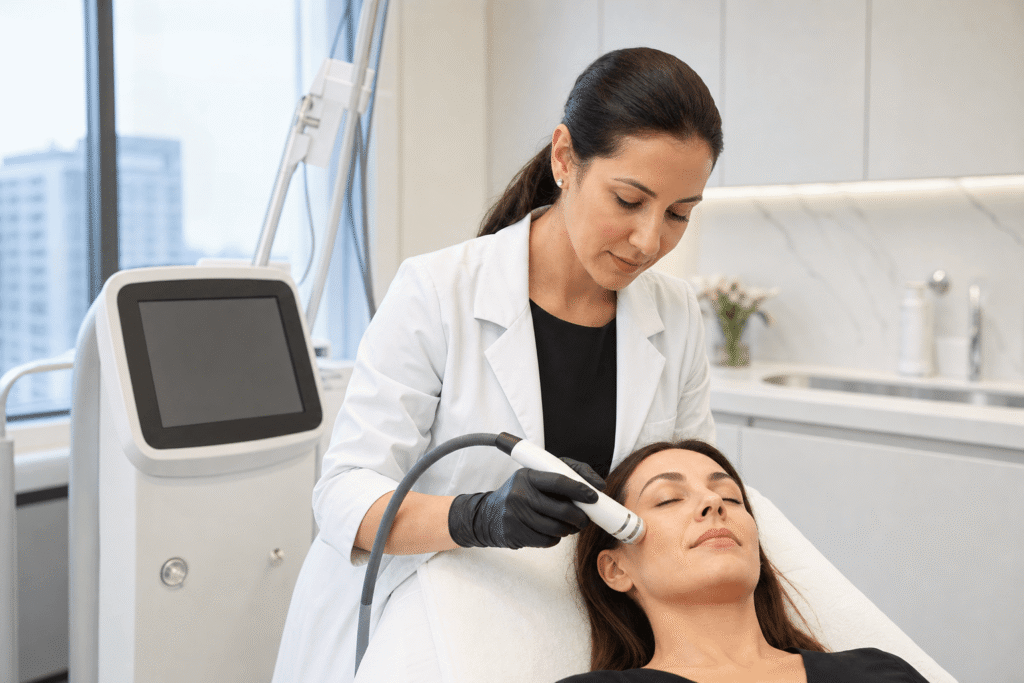
Radiofrequency (RF) delivers electromagnetic energy that heats dermal tissue to 40-45 degrees Celsius. This temperature activates fibroblasts, the cells responsible for producing new collagen and elastin. Unlike lasers, RF doesn’t rely on melanin absorption, making it safer for all skin tones.
Three RF technologies dominate the market: monopolar, bipolar, and multipolar. Monopolar penetrates deepest but requires more operator skill. Bipolar offers better control but shallower penetration. Multipolar combines multiple electrodes for uniform heating across treatment areas.
Clinical improvements appear gradually over 8-12 weeks as new collagen matures. Most protocols require 4-6 sessions spaced 3-4 weeks apart for optimal results. Single treatments produce minimal visible change despite what some providers advertise.
The sensation feels like deep warmth rather than pain. Most people tolerate RF comfortably without numbing cream, though higher energy settings on bony areas like the jawline may cause temporary discomfort that resolves immediately after treatment.
Ready to book your treatment?
Visit Soraya and the team at our North York clinic for a personalized consultation and professional laser or facial treatment.
Chemical Peels: Targeted Exfoliation for Surface Rejuvenation
Chemical peels use acids to dissolve bonds between dead skin cells, revealing fresher skin underneath while stimulating cell turnover. Depth determines results and recovery time. Superficial peels require no downtime. Medium peels cause 3-5 days of peeling. Deep peels need 10-14 days of healing.
Glycolic acid penetrates quickly for rapid exfoliation. Salicylic acid dissolves oil, making it ideal for acne-prone ageing skin. Trichloroacetic acid (TCA) reaches deeper layers for more significant texture improvement. Combination peels address multiple concerns simultaneously.
Peels work exceptionally well for treating surface concerns: fine lines, sun damage, uneven tone, and rough texture. They don’t address deeper wrinkles, significant sagging, or volume loss that require structural interventions like lasers or injectables.
The right concentration matters enormously. A 20% glycolic peel produces gentle exfoliation suitable for monthly maintenance. A 70% glycolic peel creates controlled injury requiring medical supervision and careful post-treatment care to prevent complications.
Clients combining monthly light peels with quarterly laser sessions at our clinic achieve more consistent results than those doing intense treatments sporadically. Consistency outperforms intensity for sustainable anti-ageing outcomes.
Microneedling With Growth Factors: Maximizing Your Body’s Repair Response
Microneedling creates thousands of microscopic channels in skin using fine needles. These controlled injuries trigger healing cascades that produce new collagen, improve texture, and enhance product absorption. Needle depth ranges from 0.5mm for surface concerns to 2.5mm for deeper wrinkles and scars.
The procedure gained popularity combined with platelet-rich plasma (PRP), though research shows mixed results. Standard growth factor serums may provide similar benefits without the blood draw and processing required for PRP treatments.
Results require patience and multiple sessions. Most protocols recommend 3-6 treatments spaced 4-6 weeks apart. Improvement becomes visible around session 3 as new collagen accumulates. Single treatments produce minimal lasting change despite immediate plumping from inflammation.
Recovery typically involves 2-3 days of redness and mild swelling. Skin may feel rough or flaky days 3-5 as surface cells turn over. Avoid sun exposure and active skincare ingredients for one week post-treatment to prevent irritation.
Combining Treatments: Why Layered Approaches Deliver Superior Results
The most dramatic anti-ageing outcomes come from strategic treatment combinations rather than single modalities. Lasers rebuild collagen structure. Peels refine surface texture. RF tightens loose skin. Together, they address ageing comprehensively.
Timing matters when stacking treatments. Space intensive procedures 4-6 weeks apart to allow complete healing. Combine gentle treatments in single sessions for efficiency without overwhelming skin’s recovery capacity.
A common effective sequence involves chemical peels every 4 weeks with quarterly laser sessions and biannual RF treatments. This approach maintains consistent improvement while allowing adequate recovery between intensive procedures.
At Bright and Beauty Laser Clinic on Yonge Street in North York, treatment plans typically combine our anti-ageing facial protocols with targeted laser sessions. Soraya sequences treatments based on individual healing patterns observed during initial sessions rather than following rigid protocols that ignore personal variation.
Setting Realistic Expectations: What Results Look Like and How Long They Last
No facial treatment stops ageing or produces permanent results. Even the most aggressive procedures require maintenance to sustain improvements. Laser resurfacing results typically last 2-3 years before retreatment becomes necessary. RF effects diminish gradually over 12-18 months as natural ageing continues.
Dramatic before-and-after photos often show carefully controlled lighting, angles, and makeup differences rather than treatment results alone. Expect gradual improvement of 20-40% in specific concerns rather than complete transformation.
Age influences outcomes significantly. Clients in their 30s-40s with early ageing signs respond more dramatically than those over 60 with advanced damage. Starting preventive treatments earlier produces better long-term results than attempting to reverse decades of damage later.
Lifestyle factors determine how long results last. Daily sunscreen use, consistent retinoid application, and avoiding smoking extend treatment benefits substantially. Neglecting basic skincare accelerates renewed ageing regardless of how much you invest in professional treatments.
Key Takeaways
- Choose treatments targeting your specific skin layer concerns for effective results
- Expect 3-6 sessions spaced monthly for most anti-ageing facial protocols
- Combine laser resurfacing with RF therapy for comprehensive collagen remodeling
- Verify operator credentials and device settings match your Fitzpatrick skin type
- Budget for maintenance sessions every 6-12 months to sustain initial improvements
- Ask about treatment sequencing when combining multiple modalities safely
Frequently Asked Questions
Determining what is the best facial treatment for anti ageing requires honest assessment of your specific concerns, realistic expectations about outcomes, and understanding that sustainable results come from consistent care rather than single miracle procedures. The most effective approach combines professional treatments targeting deep structural issues with daily skincare protecting against ongoing damage.
At Bright and Beauty Laser Clinic, Soraya and the team develop customized anti-ageing protocols based on detailed skin analysis, treatment history, and individual healing patterns observed over multiple sessions in their North York location. This personalized approach consistently delivers better outcomes than one-size-fits-all treatments that ignore the biological reality that everyone’s skin ages differently and responds uniquely to intervention.
Ready to develop a science-backed anti-ageing treatment plan customized for your skin type and concerns? Book your consultation at Bright and Beauty Laser Clinic in North York to discuss which combination of treatments will address your specific ageing patterns most effectively. Call (416) 666-4500 or visit us at 4789 Yonge St, Unit 408 to start your personalized skin rejuvenation journey with Toronto’s experienced aesthetic specialists.