
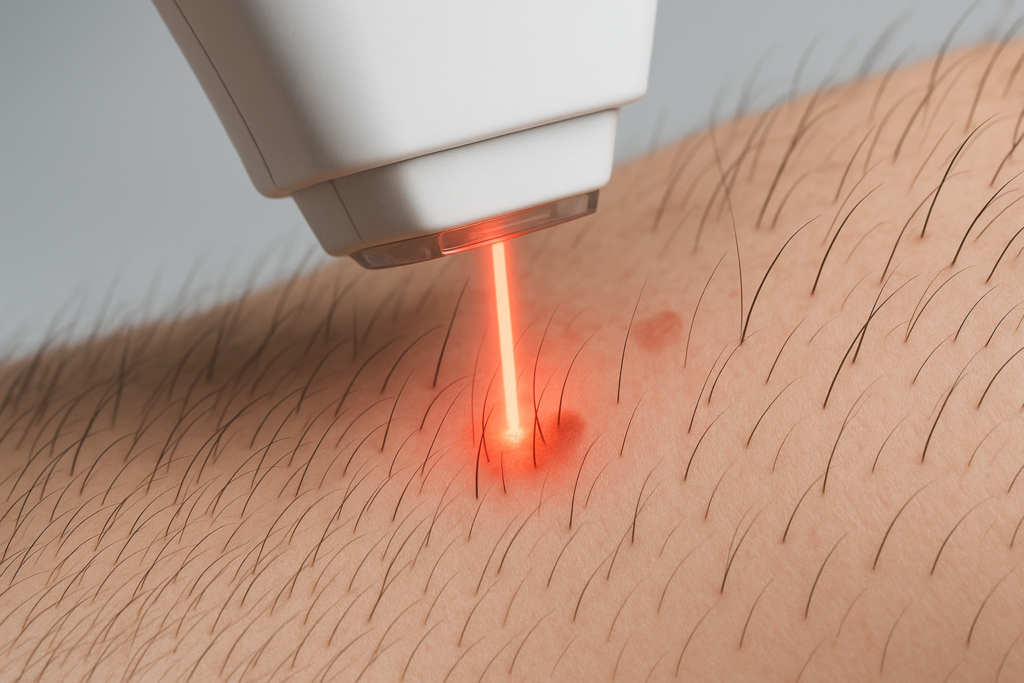
How Laser Hair Removal Works: The Science Behind Permanent Hair Reduction
Most people assume laser hair removal simply “zaps” hair follicles into oblivion with a single flash of light. The reality is far more fascinating—and understanding the actual mechanism explains why you need multiple sessions, why timing matters, and why your friend’s results might differ dramatically from yours. The process involves a precise dance between light wavelengths, melanin absorption, and follicular biology that most practitioners barely scratch the surface of when explaining the procedure. As someone who’s spent years performing these treatments and answering patient questions, I can tell you the science is both elegant and complex. Your hair follicles don’t simply disappear; they undergo targeted thermal destruction through a process called selective photothermolysis. The light energy converts to heat specifically within pigmented hair structures while leaving surrounding tissue unharmed—a remarkable feat of medical physics that took decades to perfect.
The Fundamental Science of Selective Photothermolysis
Selective photothermolysis forms the cornerstone of how laser hair removal works. This principle, first described in 1983, revolutionized dermatological procedures. The concept is deceptively simple: deliver enough energy to destroy a specific target (the hair follicle) while minimizing damage to surrounding tissue. But achieving this requires three critical parameters working in harmony.
First, wavelength selection determines what the laser energy will target. Hair follicles contain melanin, the same pigment that colors your skin and hair. Different wavelengths of light penetrate to different depths and are absorbed by melanin with varying efficiency. Alexandrite lasers (755nm), diode lasers (800-810nm), and Nd:YAG lasers (1064nm) each offer distinct advantages depending on skin type and hair characteristics.
Second, pulse duration must be shorter than the thermal relaxation time of the hair follicle—typically measured in milliseconds. This ensures the heat remains concentrated in the follicle rather than diffusing into surrounding tissue. Too long, and you risk burns. Too short, and you won’t generate enough thermal damage to disable the follicle permanently.
Finally, fluence (energy density) must reach therapeutic levels. Measured in joules per square centimeter, fluence determines whether you’ll achieve the necessary temperature elevation in the follicle to cause destruction. Under-treat, and hair grows back. Over-treat, and side effects increase. This delicate balance requires expertise and understanding of individual patient variables.
What Actually Happens Inside Your Hair Follicle
The moment laser light contacts your skin, a cascade of events begins at the cellular level. The light passes through the epidermis—ideally without causing significant heating—and penetrates to the depth where your hair follicles reside, typically 2-7mm below the surface depending on body location.
Melanin in the hair shaft acts as a chromophore, absorbing the light energy and converting it to heat. Within milliseconds, temperatures in the hair shaft rise to 60-70°C (140-158°F). This thermal energy conducts from the hair shaft to the surrounding follicular structures, particularly the bulge region where follicular stem cells reside and the dermal papilla at the follicle base.
These structures suffer thermal coagulation—essentially, the proteins denature and cells die. Think of it like cooking an egg; once those proteins change structure, there’s no going back. The follicular stem cells lose their ability to regenerate hair. The dermal papilla, which signals the follicle to produce new hair, becomes non-functional.
Here’s what surprises most patients: not every hair follicle responds the same way. Terminal hairs (thick, dark, coarse) contain abundant melanin and respond excellently. Vellus hairs (fine, light peach fuzz) contain minimal melanin and absorb insufficient energy. This explains why face laser hair removal works beautifully on dark sideburns but may not eliminate the finest facial hairs.
The Hair Growth Cycle: Why Multiple Sessions Are Non-Negotiable
Understanding the hair growth cycle explains the single most common question I hear: “Why can’t we just do this once?” Your hair follicles don’t all operate on the same schedule. At any given moment, roughly 20-25% of your follicles are actively growing (anagen phase), while the remainder are either transitioning (catagen) or resting (telogen).
Laser energy only effectively destroys follicles during the anagen phase. Why? Because only active follicles have hair shafts connected to the bulge and papilla regions. During telogen, the hair shaft has detached and is merely sitting in the follicle waiting to shed. There’s no melanin-rich conduit to transfer thermal energy to the stem cells.
Different body areas have varying anagen percentages and cycle lengths. Scalp hair remains in anagen for years—which is why it grows so long. Body hair typically stays in anagen for just weeks or months. Bikini and Brazilian laser hair removal requires 6-8 sessions because the anagen percentage in that region hovers around 30%, and each cycle takes roughly 4-6 weeks.
Leg hair presents a different challenge. The anagen phase for leg hair lasts about 16 weeks, but only 20% of follicles are in this phase at any time. This is why full legs laser hair removal requires patience and consistent treatment intervals. Missing appointments or spacing them too far apart means you’ll never catch all follicles during their vulnerable growth phase.
Melanin, Skin Type, and Treatment Parameters
Melanin serves as both the target and the challenge in laser hair removal. The same pigment that allows us to destroy hair follicles also exists in varying concentrations in the epidermis, creating competition for the laser energy.
The Fitzpatrick scale classifies skin from Type I (very fair, always burns) to Type VI (deeply pigmented, never burns). As skin type increases, so does epidermal melanin. This creates a narrow treatment window—we need enough energy to destroy follicles but not so much that we heat the epidermis to dangerous levels.
For fair-skinned patients with dark hair (the ideal scenario), high fluences are both safe and effective. The contrast between low epidermal melanin and high follicular melanin creates optimal selectivity. These patients typically see dramatic results within 4-6 sessions.
Darker skin types require longer wavelengths that penetrate deeper before being absorbed, bypassing much of the epidermal melanin. The Nd:YAG laser (1064nm) has become the gold standard for darker skin, though it requires higher fluences and more sessions to achieve comparable results. Contact cooling, which chills the epidermis before, during, and after each pulse, adds an essential safety margin.
Blonde, red, or gray hair presents a different problem entirely. These hair types contain pheomelanin (red/yellow pigment) or minimal pigment, providing insufficient chromophore for effective laser absorption. For these patients, traditional laser hair removal simply doesn’t work well. This limitation stems from physics, not technique.
Modern Laser Technologies and Their Distinctions
Walk into different clinics, and you’ll encounter various laser systems, each claiming superiority. The truth is more nuanced. Different technologies excel in different scenarios.
Alexandrite lasers deliver excellent results for fair to olive skin tones with large spot sizes (up to 24mm) that enable rapid treatment of large areas like back laser hair removal. The 755nm wavelength provides strong melanin absorption, translating to effective follicle destruction with relatively lower fluences. However, this same characteristic makes alexandrite lasers less suitable for darker skin types where epidermal melanin absorption becomes problematic.
Diode lasers (800-810nm) occupy the middle ground. They penetrate deeper than alexandrite, making them safer for light to medium skin tones while maintaining excellent efficacy. Many diode systems incorporate advanced cooling technologies and high repetition rates, allowing practitioners to treat large areas comfortably and quickly.
Nd:YAG lasers dominate treatments for darker skin types and tanned skin. The 1064nm wavelength penetrates deepest, with less melanin absorption in the epidermis. The trade-off? Lower follicular absorption requires higher fluences and typically more treatment sessions. But for patients who previously couldn’t safely undergo laser hair removal, Nd:YAG technology opened new possibilities.
Intense Pulsed Light (IPL) devices, while not technically lasers, also perform hair removal through similar mechanisms. IPL emits a broad spectrum of light (500-1200nm) rather than a single wavelength. Filters narrow this spectrum, but IPL remains less selective than true lasers. IPL can work well in experienced hands for fair-skinned patients but generally requires more sessions than laser treatments.
Pain, Sensation, and What Patients Actually Experience
Let’s address the elephant in the room: yes, it hurts. Anyone telling you laser hair removal is completely painless is either selling something or has never undergone treatment. The sensation varies from mild discomfort to sharp, stinging pain depending on multiple factors.
The physics behind the pain is straightforward. When melanin absorbs light energy and converts it to heat, that thermal energy doesn’t exist in isolation. Nerve endings near the follicle detect this temperature change and send pain signals. Thicker, denser hair requires higher fluences, generating more heat and proportionally more discomfort.
Body location dramatically affects pain perception. Areas with more nerve endings (upper lip, bikini line, underarms) feel more intense than areas with relatively fewer nerve endings (back, thighs). The thickness of the epidermis and dermis also matters—thinner skin allows more sensation to reach consciousness.
Modern cooling technologies significantly mitigate discomfort. Contact cooling plates, cryogen spray, and cold air devices chill the epidermis, reducing pain signals while providing a protective barrier against thermal injury. Topical anesthetic creams offer additional relief for sensitive areas, though they require advance application (typically 30-60 minutes before treatment).
Most patients describe the sensation as similar to a rubber band snapping against the skin, followed by warmth. For areas like underarm laser hair removal, where treatment takes just minutes, discomfort is brief and manageable. Larger areas require mental preparation and occasionally scheduled breaks during treatment.
Post-Treatment Response and Timeline Expectations
The hours and days following treatment reveal whether the laser achieved its goal. Immediately after, treated areas typically appear red and slightly swollen—similar to mild sunburn. This erythema results from thermal effects on the skin and surrounding tissue. It’s a normal response that usually resolves within 2-24 hours depending on treatment settings and individual skin sensitivity.
Some follicles release their damaged hairs immediately, while others require 7-14 days. During this period, you’ll notice what appears to be continued hair growth. This isn’t new growth—it’s the treated hairs being pushed out as the follicles expel them. Gentle exfoliation can help this process, but picking or plucking defeats the purpose and can introduce bacteria.
The real results become apparent 3-4 weeks post-treatment. You’ll notice reduced hair density in treated areas. The hair that returns (from follicles that were in telogen during treatment) often appears finer and grows more slowly. This progressive improvement continues through subsequent sessions.
Between treatments, proper skin care maintains results and prepares skin for the next session. Sun protection is non-negotiable—UV exposure increases melanin production in the epidermis, raising complication risks. Many patients combine their hair removal treatments with other aesthetic procedures like laser skin tightening for comprehensive skin rejuvenation, though timing and coordination require professional guidance.
Frequently Asked Questions
Does laser hair removal permanently remove all hair forever?
Laser hair removal achieves permanent hair reduction, not necessarily complete permanent removal. Most patients experience 80-95% reduction in hair density after completing their treatment series. The remaining hair typically grows finer and lighter. Hormonal changes, medications, or medical conditions can potentially stimulate dormant follicles years later, which is why some patients opt for occasional maintenance sessions every 1-2 years. The FDA classifies laser hair removal as “permanent reduction” rather than “permanent removal” for this reason.
Why does my hair seem darker or thicker after the first treatment?
This phenomenon, called “perifollicular edema,” occurs when inflammation around treated follicles makes hair shafts appear more prominent temporarily. Additionally, synchronized shedding sometimes creates the illusion of increased density as multiple hairs emerge simultaneously before falling out. This effect resolves within 2-3 weeks and doesn’t indicate treatment failure. It’s particularly common after first sessions when the follicular response is most dramatic.
Can I shave between treatments, and what about waxing or plucking?
Shaving is not only permitted but encouraged between sessions. Shaving removes hair above the skin surface while leaving the follicle and root intact—exactly what we need for the next treatment. Waxing, plucking, threading, or any method that removes the entire hair shaft is absolutely contraindicated. These methods eliminate the melanin target the laser needs, rendering your next treatment ineffective. If you accidentally pluck hairs, inform your practitioner—you may need to delay your next session.
How long should I wait between laser hair removal sessions?
Treatment intervals depend on body location and hair growth cycles. Facial treatments typically occur every 4-6 weeks, while body treatments may be spaced 6-8 weeks apart initially, extending to 8-12 weeks for later sessions as hair growth slows. Treating too frequently catches follicles that are still in telogen, wasting time and money. Waiting too long allows new follicles to complete their anagen phase without treatment. Your practitioner should adjust intervals based on your individual response pattern.
What should I avoid before and after my laser hair removal appointment?
Sun exposure is the primary concern before treatment. Tanned skin contains elevated epidermal melanin, competing with follicular melanin for laser energy and increasing burn risk. Avoid sun exposure for 4-6 weeks before treatment. After treatment, continue sun avoidance for at least 2 weeks. Also avoid hot baths, saunas, and intense exercise for 24-48 hours post-treatment, as these elevate skin temperature and can exacerbate inflammation. Skip exfoliating acids and retinoids for several days before and after to prevent skin sensitivity.
Taking the Next Step Toward Smooth, Hair-Free Skin
Understanding how laser hair removal works transforms the treatment from mysterious to logical. The science of selective photothermolysis, the biology of hair growth cycles, and the importance of matching technology to individual characteristics all contribute to successful outcomes. This knowledge empowers you to ask informed questions, set realistic expectations, and commit to the full treatment series required for optimal results.
The journey to permanent hair reduction requires partnership between patient and practitioner. Your commitment to treatment intervals, sun protection, and proper aftercare combines with professional expertise in parameter selection and technique. Whether you’re considering treatment for a small area or exploring options for comprehensive hair removal, the underlying mechanisms remain constant—targeted thermal destruction of follicles during their active growth phase. Schedule a consultation with a qualified practitioner to assess your skin type, hair characteristics, and individual goals. The path to smooth, maintenance-free skin begins with understanding the remarkable science that makes it possible.